[mwai_chatbot id="default"]

#dikhannewcity

Questions to Ask Before Choosing DIKNC

Questions to Ask Before Choosing DIKNC

Questions to Ask Before Choosing DIKNC 1672 941 D. I. Khan New City

Buying property is a major decision, and it should never depend only on price, attractive visuals or promises. Before choosing a plot in D.I. Khan New City (DIKNC), buyers should carefully review three important areas: possession, development progress and trust through verification.

A proper property decision begins with understanding what is available today, what is still under development and what information has been officially confirmed. This is especially important for buyers who want a residential plot, an investment opportunity or a long-term property asset in Dera Ismail Khan.

Possession is one of the first things buyers should understand before booking a plot.

A possession-related plot may give buyers more clarity about the physical location of the property and the surrounding development. However, buyers should confirm the exact status of the specific plot they are considering.

Previous DIKNC promotional material has advertised limited possessionable plots, including developed 5 Marla and 11 Marla residential plots. Because availability and terms may change, buyers should confirm the latest possession status directly with the official DIKNC team before making a decision.

Before booking, confirm the plot number, category, location and possession conditions. Buyers should also ask whether any additional possession charges or development-related conditions apply.

Check the Development Progress

A site visit is one of the most useful steps before purchasing property.

Instead of relying only on advertisements or digital visuals, buyers should inspect the project on the ground. Visible development can help buyers understand the current condition of the area and the progress taking place around their selected plot.

DIKNC promotional material has highlighted roads, sewerage systems, security, parks and mosques, educational facilities, healthcare facilities, commercial areas and other infrastructure-related features. Buyers should verify the current status of each facility and should not assume that every promoted feature is already fully operational.

During a site visit, buyers should look at road development, plot markings, infrastructure work, street conditions and surrounding development. It is also useful to ask which works are completed, which are ongoing and which are planned for the future.

Verify the Exact Plot Location

Two plots with the same size may have very different value depending on their location.

Before choosing a plot, confirm the exact block, plot number, road position and plot category. A corner plot, park-facing plot or main-road plot may have different pricing or charges compared with a standard plot.

Buyers should also ask whether any premium location charges apply. These details should ideally be confirmed in writing so there is no confusion later.

Understand the Payment Plan

A payment plan should be reviewed carefully before making a booking.

Previous DIKNC Phase 1 promotional material included payment options for developed 5 Marla and 11 Marla residential plots, with installment and full-payment structures. These figures should not automatically be treated as the current payment plan because offers and terms may change over time.

Before booking, ask for the latest official payment schedule. Buyers should understand the total plot price, down payment, installment duration and any additional charges.

It is also important to confirm whether there are development charges, possession charges, transfer fees, taxes or other costs that are not included in the basic plot price.

Review the Documentation

Property investment should always be supported by proper documentation.

Before making a payment, buyers should understand what documents will be issued after booking and how the plot allocation will be confirmed.

The booking form, allotment documents, payment receipts and transfer conditions should be reviewed carefully. Buyers should also understand the procedure for future transfer, resale and possession.

Where legal interpretation is required, independent professional advice may also be useful.

Verify Project Approvals

Approvals are an important part of property verification.

Buyers should request the latest official information regarding the project approvals and the relevant authority. Supporting documentation should be reviewed where available.

It is also important to confirm whether the approval applies to the specific phase or area being considered. Buyers should avoid relying only on old advertisements, screenshots or forwarded social media messages.

Current information should always be confirmed through official DIKNC channels.

Visit the Site Before You Decide

A physical visit can give buyers a much clearer understanding of the project.

During the visit, buyers can inspect road access, plot markings, infrastructure progress, surrounding development and security arrangements.

A site visit also allows buyers to compare different plot options before making a final decision.

For overseas Pakistanis who cannot visit personally, a trusted family member or representative can visit the project and confirm details with the official DIKNC team.

Ask About Facilities Carefully

Amenities can add value to a real estate project, but buyers should clearly understand which facilities are available today and which are still planned or under development.

DIKNC promotional material has referenced parks and mosques, security and surveillance, educational facilities, healthcare facilities, commercial areas, sewerage infrastructure, internet connectivity and water filtration.

Before making a decision, buyers should ask about the present status of the facilities that matter most to them.

This helps create a realistic understanding of the project instead of relying only on future expectations.

Residential or Commercial: Choose According to Your Goal

Different buyers have different priorities.

A residential buyer may focus more on peaceful surroundings, road access, security, community spaces and future lifestyle facilities.

An investor may focus more on location, development progress, resale potential, accessibility and commercial activity.

Commercial buyers should also consider road frontage, surrounding land use and possible future business activity.

The right choice depends on the buyer’s budget, purpose and long-term objective.

Trust Comes From Verification

Trust in real estate should come from clear information and proper verification.

Before choosing DIKNC, buyers should visit the site, speak with the official team and request written information where possible.

Payment terms, plot location, possession status, development progress and documentation should all be checked before a final decision is made.

This approach helps buyers make a more informed and responsible property decision.

Final Thoughts

Choosing a plot in D.I. Khan New City should involve more than asking about the price.

Buyers should understand the possession status, inspect the development progress and confirm the exact location of the plot. The latest payment plan, charges and documentation should also be reviewed carefully.

Facilities and future development should be discussed with the official DIKNC team so buyers can clearly understand what is available today and what may be planned for the future.

Whether you are buying for your family, planning for long-term ownership or considering a property investment, possession, progress and trust should remain at the centre of your decision.

Visit the project, verify the details and make your choice with confidence.

Recent Floods in Pakistan 2026

Recent Floods in Pakistan 2026

Recent Floods in Pakistan 2026 1672 941 D. I. Khan New City

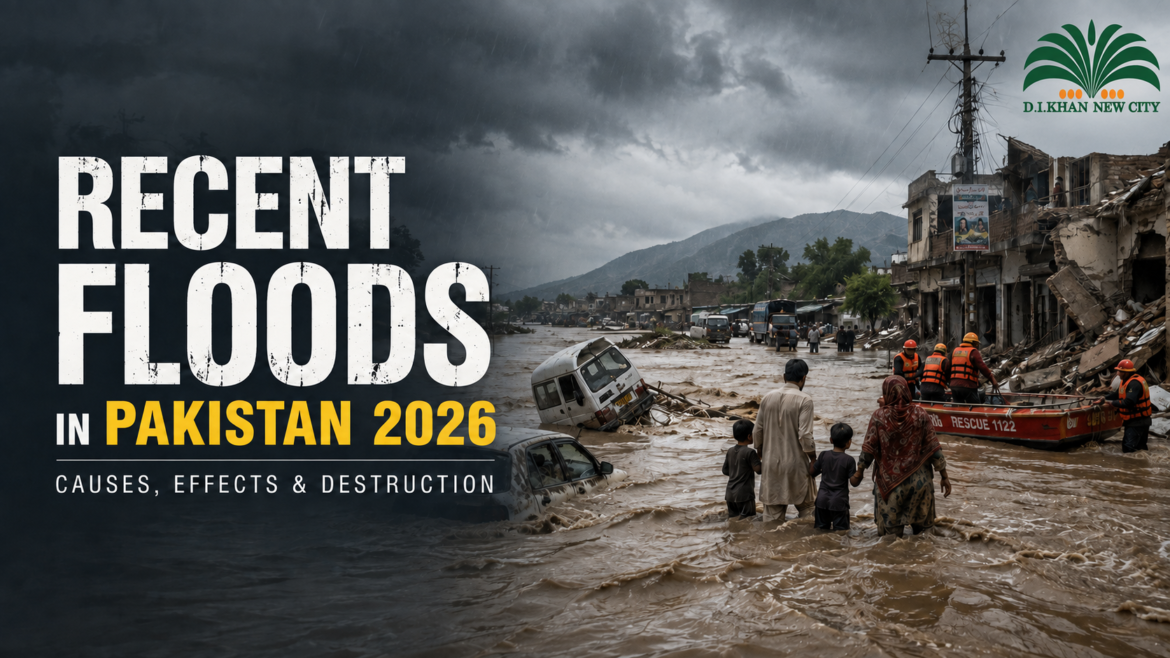
Pakistan is once again facing the destructive consequences of monsoon rains, flash floods, urban flooding and weather-related disasters in 2026.

From mountainous areas of Khyber Pakhtunkhwa and Gilgit-Baltistan to communities in Punjab, Sindh, Balochistan and Azad Jammu & Kashmir, this year’s monsoon season has affected lives, homes, livestock and infrastructure.

According to the National Disaster Management Authority (NDMA), from 26 June to 3 September 2026, monsoon-related incidents across Pakistan had caused 180 deaths and 509 injuries. The official data also recorded 1,716 damaged houses and 1,483 livestock losses during this period.

The floods are not simply the result of “too much rain.” Pakistan’s flood risk is shaped by a combination of intense weather, geography, climate change, rapid urban development, inadequate drainage and long-term environmental pressures.

Understanding these causes is becoming increasingly important because extreme weather is no longer an occasional national concern. It is becoming a recurring challenge to communities, infrastructure and economic stability.

Current Flood Situation in Pakistan in 2026

Pakistan’s 2026 monsoon season began bringing significant weather-related losses from late June.

NDMA figures up to 3 September 2026 show that Khyber Pakhtunkhwa had recorded the highest number of deaths, at 74, followed by Punjab with 61. Sindh recorded 17 deaths, Azad Jammu & Kashmir 16, Balochistan eight, Islamabad Capital Territory three and Gilgit-Baltistan one. Children accounted for 82 of the 180 recorded deaths, highlighting the particularly severe human cost of the monsoon season.

Damage has also extended beyond human casualties. NDMA recorded 589 completely destroyed homes and 1,127 partially damaged homes, taking the total to 1,716 houses.

Gilgit-Baltistan alone accounted for 535 damaged houses and 910 livestock losses, while Khyber Pakhtunkhwa recorded 380 damaged houses.

Infrastructure has also suffered. By 3 September, NDMA had recorded approximately 34.56 kilometres of damaged roads and 41 damaged bridges during the monsoon period. More than 10,650 people had been rescued or evacuated nationwide.

These numbers may continue to change as the monsoon season progresses and damage assessments are updated.

Why Are Floods Happening in Pakistan?

1. Intense Monsoon Rainfall

The most immediate cause of flooding is heavy monsoon rainfall.

Pakistan receives much of its seasonal rain between June and September. When large amounts of rain fall within a short period, rivers, streams, hill torrents and urban drainage systems may not have enough capacity to carry the water safely.

During the 2026 season, the Pakistan Meteorological Department repeatedly reported weather systems involving monsoon currents from the Arabian Sea and Bay of Bengal, together with low-pressure systems and westerly waves.

For example, late July forecasts warned of widespread rainfall and heavy to very heavy falls across several regions, with rising river levels and increased risks of flash and urban flooding.

This matters because total seasonal rainfall is only part of the story. A region may receive average or even below-average rainfall overall while still experiencing a short period of extremely intense rain capable of producing disastrous flash floods.

2. Erratic Weather and Climate Change

Climate change does not mean that every individual flood can automatically be blamed on global warming. Weather attribution requires proper scientific analysis.

However, scientists increasingly warn that a warmer climate can intensify several conditions associated with destructive flooding.

In July 2026, the International Centre for Integrated Mountain Development (ICIMOD) warned that rising temperatures and increasingly erratic monsoon patterns were heightening flash-flood risks across the Hindu Kush Himalayan region. Scientists highlighted a dangerous pattern of longer dry periods interrupted by sudden, intense rainfall.

Warmer air can hold more moisture, while changing atmospheric circulation can alter rainfall distribution. This can contribute to highly concentrated rainfall events rather than gentle and evenly distributed seasonal rain.

For Pakistan, therefore, climate adaptation is increasingly becoming a matter of infrastructure, planning and public safety rather than an abstract environmental debate.

3. Glacier Melt and Glacial Flood Risks

Northern Pakistan faces another challenge: its enormous glacier systems.

The Hindu Kush, Karakoram and Himalayan regions contain thousands of glaciers that contribute water to the Indus River system.

Higher temperatures can accelerate snow and ice melt and contribute to the formation or expansion of glacial lakes. When the natural barriers holding these lakes fail, they can produce Glacial Lake Outburst Floods, commonly known as GLOFs.

Research cited by ICIMOD has warned that increasing temperatures in northern Pakistan can increase snow and ice melt and contribute to potentially dangerous glacial lakes.

These events are particularly dangerous because floodwater can travel rapidly through narrow mountain valleys while carrying rocks, mud, trees and debris.

4. Pakistan’s Geography

Pakistan’s geography naturally makes parts of the country highly exposed to flooding.

The Indus River and its tributaries form one of the country’s most important water systems. Communities, agriculture and economic activity have historically developed around these rivers because water is essential for farming and settlement.

But the same river systems can become dangerous during extreme rainfall or unusually high flows.

Mountainous regions face flash floods and landslides. Plains can experience river flooding. Southern and coastal areas can face waterlogging and urban flooding.

In other words, Pakistan has managed to collect several different types of flood risk within one country. Geography apparently believed specialization was overrated.

5. Poor Drainage and Rapid Urbanization

Heavy rain does not automatically have to become an urban disaster.

The severity of flooding often depends on how effectively a city manages water.

Rapid construction replaces soil and vegetation with roads, concrete and buildings. Natural ground can absorb some rainwater, while paved surfaces produce greater surface runoff.

At the same time, inadequate stormwater infrastructure, blocked drainage channels, solid waste and construction around natural waterways can reduce the ability of water to escape.

World Bank assessments of Pakistan’s urban infrastructure have highlighted problems including inadequate drainage, blocked natural channels, solid waste accumulation and encroachment, all of which can worsen flooding during extreme rainfall.

The issue is particularly important as Pakistan’s cities continue expanding.

Urban development therefore needs to consider where water will go during an extreme rainfall event, rather than discovering the answer after streets have transformed into rivers.

6. Loss of Natural Water-Absorbing Areas

Trees, forests, wetlands, agricultural land and natural drainage channels help slow and absorb water.

When vegetation is removed or natural surfaces are heavily developed, rainfall can reach rivers and drainage systems more rapidly.

Soil erosion can also increase sediment in waterways and reduce their effective capacity.

This does not mean that planting trees alone will prevent major floods. However, watershed management, vegetation protection, erosion control and restoration of natural drainage areas can form an important part of long-term flood management.

7. Development in Flood-Prone Areas

Population growth increases pressure for housing, roads, businesses and agricultural land.

As settlements expand toward riverbanks, natural drainage routes, low-lying areas and floodplains, more people and property become exposed.

The World Bank has found that the expansion of urban settlements has increased exposure to flood hazards in several Pakistani cities. Cities including Lahore, Gujrat, Sialkot, Hyderabad, Kotri and Sukkur face varying levels of river-related flood exposure.

Better land-use planning is therefore just as important as building flood-control infrastructure.

Effects of the Recent Floods in Pakistan

Loss of Human Life

The most serious consequence is the loss of life.

The 2026 NDMA figures demonstrate that children have been particularly vulnerable. Beyond fatalities, hundreds of people have been injured while thousands have required rescue or evacuation.

For affected families, statistics cannot capture the actual cost. A destroyed house can eventually be rebuilt. A lost family member cannot.

Destruction of Houses and Communities

Floodwater can damage walls, foundations, electrical systems, roads, water supplies and household belongings within minutes.

For lower-income families, the destruction of a home may also mean the disappearance of most of their accumulated wealth.

Reconstruction can take months or years, especially in remote communities where roads and bridges are also damaged.

Damage to Roads and Bridges

Flooding can isolate entire communities when roads or bridges collapse.

This creates a secondary crisis. Food, medicine, rescue personnel and reconstruction equipment become harder to transport.

Northern mountainous regions face particular difficulties because a single damaged bridge or mountain road may cut off the main route connecting several villages.

Agriculture and Livestock Losses

Pakistan’s agriculture is highly dependent on predictable water availability.

Flooding can destroy standing crops, damage farmland, wash away fertile soil and kill livestock. At the same time, prolonged waterlogging can delay future planting.

The consequences can eventually move beyond rural areas.

Reduced agricultural production can affect farmer incomes, food supply chains, commodity prices and overall food security.

Threats to Clean Water and Public Health

Floodwater can mix with sewage, waste and contaminated surface water.

Damaged sanitation facilities can increase the risk of diarrhoeal diseases and other waterborne infections. Standing water can also create breeding conditions for mosquitoes.

Therefore, safe drinking water, sanitation and medical services become essential parts of the emergency response after flooding.

Economic Losses

The economic consequences of floods spread far beyond visible structural damage.

Businesses may close temporarily. Employees may be unable to travel. Crops can be lost. Roads need reconstruction. Electricity and telecommunications infrastructure may be disrupted.

Pakistan has already experienced how expensive major flood disasters can become. Following the catastrophic 2022 floods, a joint post-disaster assessment estimated more than US$14.9 billion in physical damage and around US$15.2 billion in economic losses.

The 2026 situation is different in scale, and comparable nationwide economic-loss estimates for the current season should not be assumed until official assessments are completed. Still, the historical lesson is painfully clear: prevention usually costs less than reconstruction.

Flood Risk Remains a Continuing Concern

Pakistan’s 2026 monsoon risk had not completely ended by early September.

In its 4 September 2026 flood bulletin, the Flood Forecasting Division of the Pakistan Meteorological Department expected river flows in the Indus, Jhelum, Chenab and Ravi to rise moderately during the following 24–36 hours.

It also warned about possible flash flooding in streams of Khyber Pakhtunkhwa and urban flooding in locations including Islamabad, Rawalpindi, Jhelum, Gujrat, Gujranwala, Sialkot and Narowal.

This reinforces an important point: flood preparedness should continue even during periods when rainfall temporarily decreases.

What Can Pakistan Do to Reduce Future Flood Destruction?

Pakistan cannot stop the monsoon, nor can it move its mountains and rivers somewhere more administratively convenient.

It can, however, reduce vulnerability.

Long-term resilience requires better flood forecasting and early-warning systems, stronger drainage networks, regular clearing of waterways, protection of natural drainage corridors, safer construction standards and stricter planning in flood-prone areas.

Watershed management and erosion control can reduce runoff risks in vulnerable regions. Northern communities also require greater monitoring of glaciers and potentially dangerous glacial lakes.

Meanwhile, disaster planning should increasingly focus on communities rather than simply infrastructure. People need clear evacuation routes, accessible warnings, emergency shelters, clean water and rapid medical assistance.

Flood resilience is therefore not the responsibility of one department. It requires coordination among federal and provincial authorities, municipal institutions, disaster-management agencies, researchers, communities and development organizations.

Conclusion: Pakistan Must Move From Flood Response to Flood Resilience

The recent floods in Pakistan in 2026 are another reminder that natural hazards become disasters when they meet vulnerable communities and infrastructure.

Heavy monsoon rain remains the immediate trigger for many floods. Yet the scale of destruction is influenced by a much wider combination of factors: climate change, glacier risks, urbanization, blocked drainage systems, exposed settlements, environmental degradation and infrastructure vulnerability.

As of 3 September, Pakistan’s 2026 monsoon season had already resulted in 180 deaths, 509 injuries and damage to more than 1,700 homes, according to NDMA.

The challenge now is not only to respond after disaster strikes.

Pakistan needs to invest continuously in climate-resilient infrastructure, responsible urban planning, flood forecasting, drainage management, watershed protection and community preparedness.

The country cannot eliminate extreme weather. But with better planning and stronger resilience, extreme weather does not always have to produce extreme destruction.

Green and Open Planning in DIKNC

Green and Open Planning in DIKNC

Green and Open Planning in DIKNC 1672 941 D. I. Khan New City

Modern real estate is no longer simply about owning a plot. Buyers increasingly consider the quality of the surrounding environment, road infrastructure, open spaces and essential community systems before making a long-term property decision.

That is where the planning vision of D. I. Khan New City (DIKNC) becomes important.

Designed around a combination of residential development, open areas and supporting infrastructure, D. I. Khan New City aims to create an environment where urban convenience can coexist with greenery and organised community planning.

A Community Planned Beyond Individual Plots

A well-planned community is defined by much more than the dimensions of its residential plots.

The spaces between homes matter just as much.

Roads influence accessibility. Parks support recreation. Green areas improve the visual environment. Utility systems support everyday living. Together, these elements contribute to the long-term functionality and appeal of a neighbourhood.

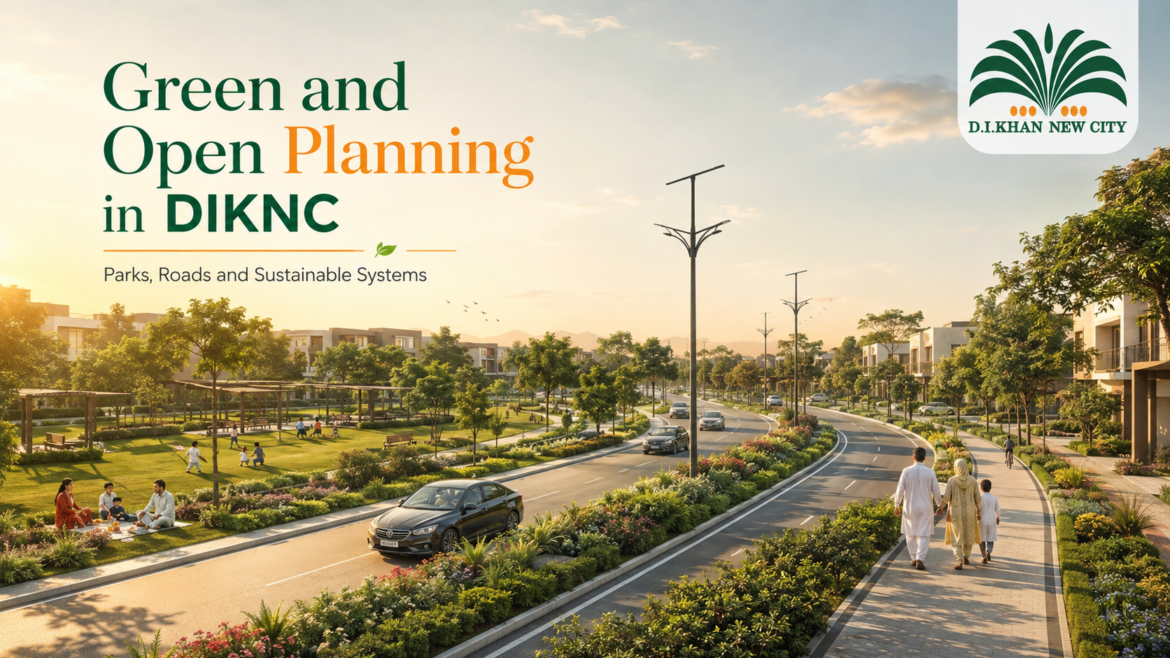
DIKNC’s published project material lists amenities and infrastructure including parks and mosques in every sector, a 180-foot main boulevard, minimum 40-foot streets, an underground sewerage system, a water filtration plant, high-speed internet and 24-hour security and surveillance.

This integrated planning approach helps position DIKNC as more than a collection of residential plots. It reflects a broader vision for an organised urban community.

Green Spaces That Add Value to Everyday Living

Green spaces have become an increasingly valuable element of modern residential planning.

Parks provide places where residents can spend time outdoors, families can gather and children can enjoy recreational surroundings away from heavily built-up areas.

According to DIKNC’s official project material, parks are planned within every sector.

This type of neighbourhood planning can contribute to a more balanced residential environment by keeping recreational and open areas closer to the community.

From a property perspective, thoughtfully planned green areas can also strengthen the overall character and attractiveness of a development.

For homebuyers, that means looking beyond the house itself and considering the environment in which everyday life will unfold.

Wide Roads Designed for Better Movement

Road infrastructure is one of the most important elements of any growing residential community.

Poorly planned streets can eventually create congestion, access problems and inconvenience. A structured road network, on the other hand, can help improve movement throughout a development.

DIKNC’s published amenities include a 180-foot main boulevard and minimum 40-foot streets.

The emphasis on wider internal roads supports a more organised urban layout while providing space for smoother residential and commercial movement.

A well-planned road network can also improve the overall visual appearance of a community, particularly when roads are integrated with landscaped areas and organised development zones.

Sustainable Systems Beneath the Surface

Some of the most important elements of a residential development are the ones residents rarely see.

Urban infrastructure such as sewerage and water systems plays a critical role in supporting a community over the long term.

DIKNC lists an underground sewerage system and water filtration plant among its planned community amenities.

Underground infrastructure can help create a cleaner and more organised streetscape while supporting the practical requirements of a modern residential development.

Similarly, planning for water filtration reflects the importance of incorporating essential utility systems into community development rather than treating them as an afterthought.

These may not be the features that dominate glossy property advertisements, because apparently sewerage systems have yet to develop an Instagram following, but they are precisely the features serious property buyers should examine.

Technology as Part of Modern Community Planning

Modern communities are increasingly dependent on digital connectivity.

Internet access now supports work, education, communication, entertainment and business activity. As remote working and digital services become more common, connectivity has become an important consideration for residential planning.

High-speed internet is included among the amenities listed for D. I. Khan New City.

Combining physical infrastructure with digital connectivity supports the broader objective of creating a community suited to modern lifestyles.

Security and Community Planning Working Together

A premium residential environment also requires attention to security.

DIKNC lists 24-hour security and surveillance among its community amenities.

Security planning can be particularly important for families, investors and overseas Pakistanis considering property for long-term ownership.

When combined with structured streets, planned public spaces and community facilities, security becomes part of a broader approach to organised residential living.

Why Green and Open Planning Matters for Property Buyers

For buyers and investors, master planning can influence both lifestyle appeal and long-term property desirability.

When evaluating a residential development, buyers should therefore consider:

  • Availability of parks and open areas
  • Road widths and internal accessibility
  • Water and sewerage infrastructure
  • Security arrangements
  • Digital connectivity
  • Long-term organisation of residential and commercial areas

DIKNC brings several of these elements together within its stated development vision, creating a proposition focused not only on property ownership but on the environment surrounding that property.

A Better Approach to Modern Urban Living

Cities continue to expand, and the value of organised development becomes increasingly apparent as populations grow.

Communities planned with green areas, wider streets and supporting infrastructure have an opportunity to offer residents a more comfortable and structured urban environment.

D. I. Khan New City’s approach reflects this shift toward integrated community planning.

Its listed amenities, including parks within sectors, broad roads, security, underground sewerage, water filtration and digital connectivity, demonstrate a development concept that considers both everyday lifestyle and long-term infrastructure requirements.

Invest in More Than a Plot

Choosing property is ultimately about choosing what surrounds that property.

At D. I. Khan New City, the vision extends beyond residential plots toward a community shaped by open spaces, organised roads, essential infrastructure and modern connectivity.

For families looking toward their future and investors considering the long-term potential of D. I. Khan’s real estate market, understanding the master planning behind a development can be just as important as choosing the right plot.

Beyond Housing Building the Institutional Future of D. I. Khan New City

Building the Institutional Future of D. I. Khan New City

Building the Institutional Future of D. I. Khan New City 1920 700 D. I. Khan New City

A truly successful city is not defined by houses and roads alone. It is shaped by the institutions that support education, healthcare, employment, hospitality and community life.

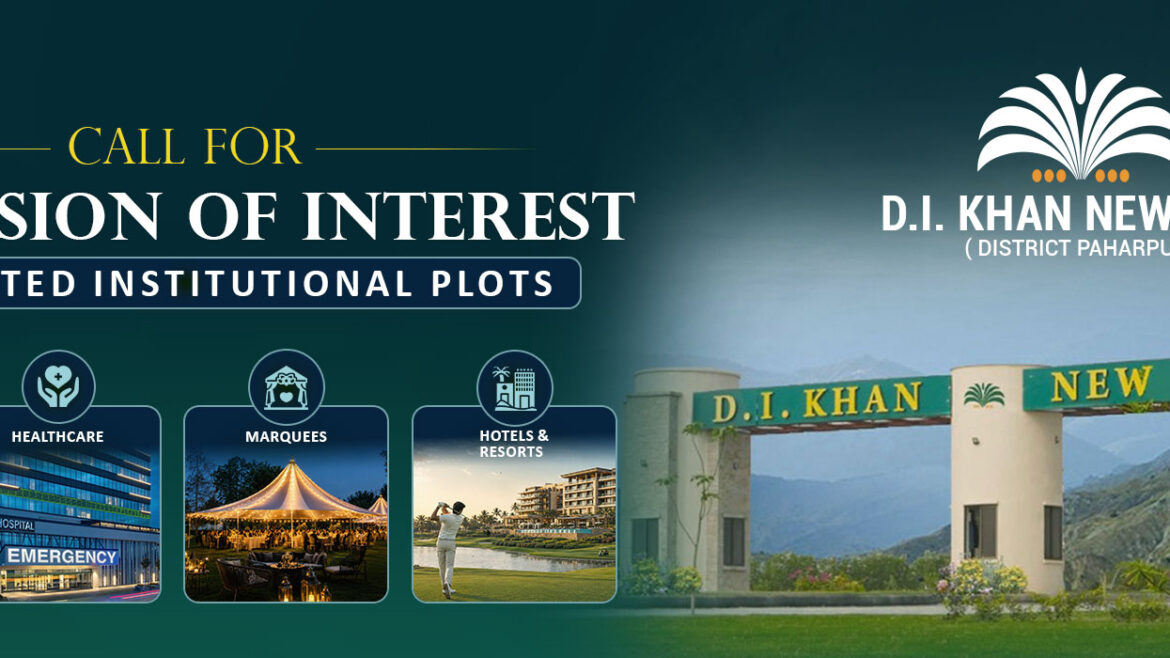
This is the wider vision behind the latest Call for Expression of Interest at D. I. Khan New City. Reputable organizations and investors are invited to explore designated institutional plots for educational institutions, healthcare facilities, marquees, hotels and resorts.

Developed by JK&S Global Developers (Pvt.) Limited, a Saif Group company, D. I. Khan New City is envisioned as a modern, secure and thoughtfully planned community in District Paharpur. Its official website highlights gated access, security, open spaces and connectivity with the wider CPEC corridor. Learn more about D.I. Khan New City.

Why Institutional Development Matters

Residential development creates a population. However, institutions transform that population into a connected and sustainable community.

Schools educate future generations. Hospitals improve access to essential care. Marquees support social and cultural occasions. Meanwhile, hotels and resorts encourage hospitality, business travel and regional activity.

Therefore, institutional development is not a secondary part of urban planning. It is one of the foundations of a complete city.

The current EOI initiative gives established organizations an opportunity to become part of this developing institutional ecosystem.

Educational Institutions: Investing in Future Generations

Education is central to the long-term progress of any region. For this reason, the EOI includes designated plots for:

  • Colleges
  • Schools
  • Technical training institutes
  • IT Park

These institutions can help create a stronger educational environment for residents and surrounding communities. Moreover, technical and professional training facilities can support skills development and prepare young people for emerging employment opportunities.

The planned Educational Square and IT Park also reflect the project’s broader focus on education, technology and community development.

For reputable education providers, this represents an opportunity to establish an institutional presence in a master-planned environment designed for future growth.

Healthcare: Creating Access to Essential Services

Healthcare facilities are equally important for a complete urban community. The EOI welcomes proposals for:

  • Hospitals
  • Nursing institutes

A strategically planned healthcare facility can serve residents while also supporting people from nearby areas. In addition, nursing and healthcare training institutions can contribute to professional skills development within the region.

  1. I. Khan New City’s facilities plan includes a medical complex and emergency-management considerations. Consequently, healthcare institutions can complement the wider vision of a community where essential services are planned within accessible surroundings.

Marquees and Banquet Facilities

Social gatherings, weddings and community events are an important part of life in D. I. Khan and the surrounding region. Therefore, designated plots are also available for:

  • Wedding marquees
  • Banquet halls

A professionally designed marquee or banquet facility can become an important social destination within a planned community.

Furthermore, organized event venues can provide a more convenient and secure environment for families, businesses and institutions hosting private or formal gatherings.

Hotels and Resorts: Supporting Regional Hospitality

As regional connectivity and economic activity develop, the need for quality hospitality facilities may also increase.

The current EOI includes opportunities for:

  • Premium hotels
  • Holiday resorts

Such facilities can serve business visitors, families, institutional guests and travellers. They can also strengthen the wider hospitality ecosystem of D. I. Khan and District Paharpur.

The natural landscape surrounding D. I. Khan New City provides an attractive setting for carefully planned hospitality concepts. However, applicants should conduct their own commercial and technical assessment before submitting a proposal.

Strategic Positioning and Connectivity

Location is a major consideration for any institutional development.

The official project website places D. I. Khan New City approximately a 30-minute drive from Chashma Barrage and describes the community as positioned along the wider CPEC corridor. The EOI material also highlights connectivity with the CPEC Western Route.

This positioning may help institutions serve residents, nearby communities and visitors travelling through the region.

In addition, the project’s planned wide roads, gated access and security framework can support organized movement within the community.

A Planned Environment for Long-Term Institutions

Institutions require more than land. They need supporting infrastructure, accessibility, security and a compatible surrounding environment.

The D. I. Khan New City vision includes:

  • Round-the-clock security
  • Wide roads
  • Parks and green belts
  • Grand Mosque
  • Solar-energy planning
  • Water-filtration systems
  • Street lighting
  • Regional connectivity
  • Supporting residential and commercial areas

These elements are intended to create an organized environment in which institutions can operate alongside residential and commercial development.

However, applicants should verify the current development status, technical specifications, allocation criteria and applicable terms directly with the official EOI team.

What Organizations Should Include in Their EOI

Interested and well-established organizations should prepare a clear submission that explains both their institutional capacity and proposed concept.

The submission should include:

  1. Company or institutional profile
    Introduce the organization, its experience and relevant projects.
  2. Proposed project details
    Explain whether the proposal is for a school, college, technical institute, hospital, nursing institute, marquee, hotel or resort.
  3. Space requirements
    Clearly identify the estimated land and built-up space needed for the project.
  4. Implementation approach
    Provide a practical overview of how the proposed facility may be developed and operated.
  5. Community value
    Describe how the institution could contribute to residents and the wider region.

A focused and professionally prepared proposal will help the project team understand the organization’s requirements and suitability.

Submission Deadline and Contact Information

Expressions of Interest must be submitted before 15 September 2026.

EOI Email: eoi@jks.global
Landline: +92 51 591 3012-3
WhatsApp: +92 303 2224345
Website: www.dikhannewcity.com

Interested parties should contact the official team to obtain current information regarding plot dimensions, eligibility, documentation, allocation procedures and other applicable requirements.

Building the Institutions of Tomorrow

The future of a planned city depends on the quality of the institutions that become part of it.

Through this Call for Expression of Interest, D. I. Khan New City is opening the door for reputable education providers, healthcare organizations, hospitality groups and event-management businesses to explore a presence within its developing community.

For organizations with a long-term vision, this is an opportunity to propose a project that can serve people, strengthen the region and become part of D. I. Khan New City’s institutional future.

Submit your Expression of Interest before 15 September 2026.

Civil Works Progress at D. I. Khan New City

Civil Works Progress at D. I. Khan New City

Civil Works Progress at D. I. Khan New City 1536 1024 D. I. Khan New City

Every successful city begins with a strong foundation. At D. I. Khan New City, that foundation is becoming a reality through continuous civil works designed to create a modern, secure, and sustainable community for generations to come.

From the construction of a grand mosque to the development of wide road networks, landscaped parks, underground sewerage systems, and modern infrastructure, every milestone reflects the project’s commitment to quality and long-term value.

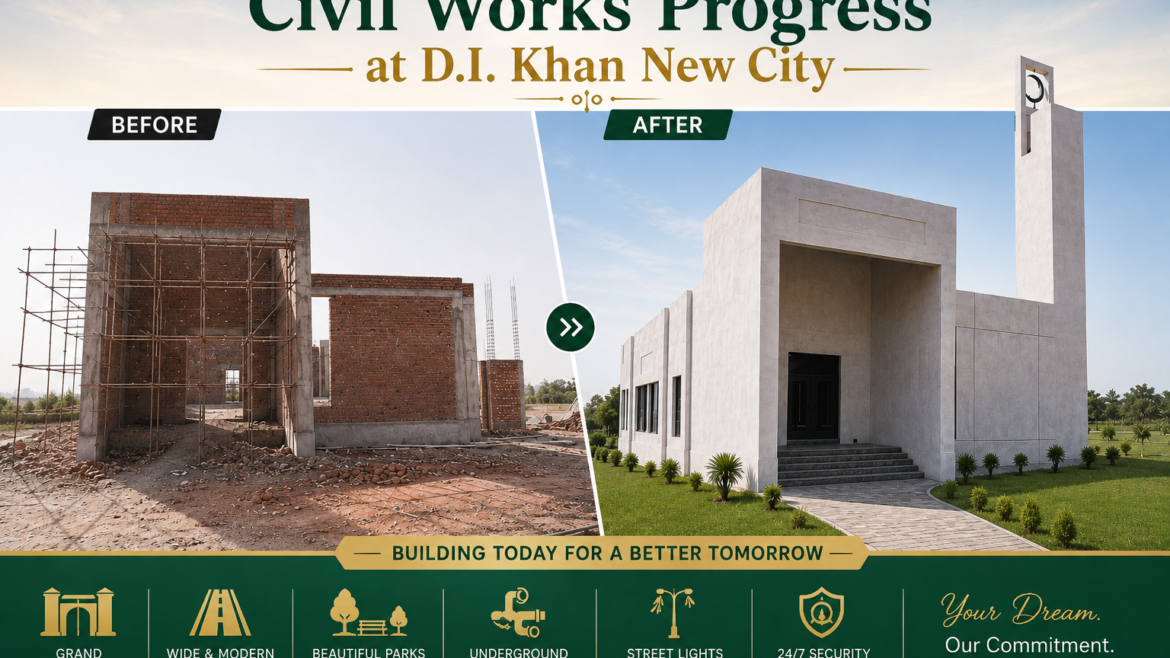
The before-and-after photographs of these developments clearly demonstrate the remarkable transformation taking place across the project. After all, humans do enjoy watching empty land slowly evolve into somewhere they can argue about parking.

Grand Mosque Construction: A Symbol of Community

One of the most significant ongoing developments is the construction of the central mosque, which is steadily taking shape as a spiritual and architectural landmark within the community.

Designed to serve residents with comfort and dignity, the mosque represents more than just a place of worship. It will become a gathering place that strengthens community bonds and enriches everyday life.

The construction process highlights:

  • Strong structural foundations
  • High-quality reinforced concrete framework
  • Modern architectural design
  • Spacious prayer halls
  • Landscaped surroundings
  • Easy accessibility from surrounding sectors

The transformation from the initial groundwork to the current structure showcases the project’s consistent progress and commitment to delivering premium facilities.

Wide Roads Built for Tomorrow’s Traffic

A well-planned road network is essential for any successful residential development.

At D. I. Khan New City, modern road infrastructure is being developed with long-term urban planning in mind. Wide boulevards and internal streets are designed to provide smooth traffic flow, improved safety, and convenient access throughout the community.

Current road development includes:

  • Wide main boulevard construction
  • Sector roads
  • Proper road grading and compaction
  • Road base preparation
  • Concrete curbs
  • Future-ready utility corridors

These roads are designed not only for today’s residents but also to accommodate future growth as the community expands.

Underground Sewerage System: Infrastructure You Don’t See but Always Need

Modern living depends on reliable infrastructure beneath the surface.

D. I. Khan New City is investing in a comprehensive underground sewerage system that supports efficient wastewater management while maintaining a clean and healthy environment.

The ongoing civil work includes:

  • Underground sewer pipelines
  • Inspection chambers
  • Drainage connections
  • Proper water flow planning
  • Long-term maintenance access

By installing these systems during the development phase, the project ensures a cleaner, more sustainable community for years to come.

Beautiful Parks and Green Spaces Taking Shape

Open spaces are an important part of modern urban planning.

The development team is actively creating landscaped parks and recreational areas that will provide residents with peaceful surroundings for walking, relaxation, and family activities.

Current park development includes:

  • Land grading
  • Plantation areas
  • Walking pathways
  • Green belts
  • Children’s play zones
  • Future recreational facilities

These green spaces will contribute to a healthier lifestyle while enhancing the overall beauty of the community.

Quality Infrastructure Built to Last

Every stage of construction at D. I. Khan New City follows a planned development strategy focused on durability, safety, and modern engineering standards.

Civil works currently extend across multiple areas, including:

  • Boundary infrastructure
  • Internal road networks
  • Utility installation
  • Drainage systems
  • Public facilities
  • Community spaces
  • Street preparation
  • Landscaping works

Rather than rushing development, each stage is completed with attention to quality and long-term performance.

A Development You Can See Progressing

One of the strongest indicators of a credible real estate project is visible on-site development.

Visitors to D. I. Khan New City can witness active construction across different sectors, where civil works continue to transform the landscape into a fully functional modern community.

The visible progress provides confidence to:

  • Homebuyers
  • Investors
  • Businesses
  • Educational institutions
  • Healthcare organizations
  • Commercial developers

Construction activity demonstrates that the vision is steadily becoming reality.

Why Ongoing Civil Works Matter

Infrastructure development directly influences the future value of any real estate investment.

Projects with completed roads, utilities, public facilities, and community infrastructure typically offer greater confidence to investors and create stronger long-term growth potential.

The ongoing civil works at D. I. Khan New City reflect:

  • Planned urban development
  • Sustainable infrastructure
  • Modern engineering practices
  • Enhanced quality of life
  • Long-term investment potential

Experience the Progress Yourself

Every completed road, every newly developed park, and every structure rising from the ground brings D. I. Khan New City closer to becoming one of the region’s most modern residential communities.

The ongoing construction of the mosque, roads, underground utilities, and public infrastructure demonstrates the project’s dedication to creating a thoughtfully planned environment where families can live, grow, and prosper.

As you compare the before-and-after images of these developments, you’ll see more than construction progress. You’ll see the transformation of a vision into a thriving community built for the future.

Leisure Living at D. I. Khan New City

Leisure Living at D. I. Khan New City

Leisure Living at D. I. Khan New City 1672 941 D. I. Khan New City

Modern families expect more from a residential community than a house or plot. They want security, greenery, recreation, convenience and a welcoming environment where every generation can enjoy a better quality of life.

D. I. Khan New City (DIKNC) brings these lifestyle elements together through thoughtful community planning. The project aims to create a modern destination where families can live comfortably, stay active and enjoy meaningful time together.

What Makes the DIKNC Lifestyle Different?

Leisure living means enjoying relaxation, recreation and everyday convenience close to home. Families should not need to travel long distances whenever they want to walk, exercise, shop or spend time outdoors.

DIKNC plans residential areas alongside green spaces, recreational destinations, commercial zones and essential services. This approach creates a more organised environment and adds greater value to everyday life.

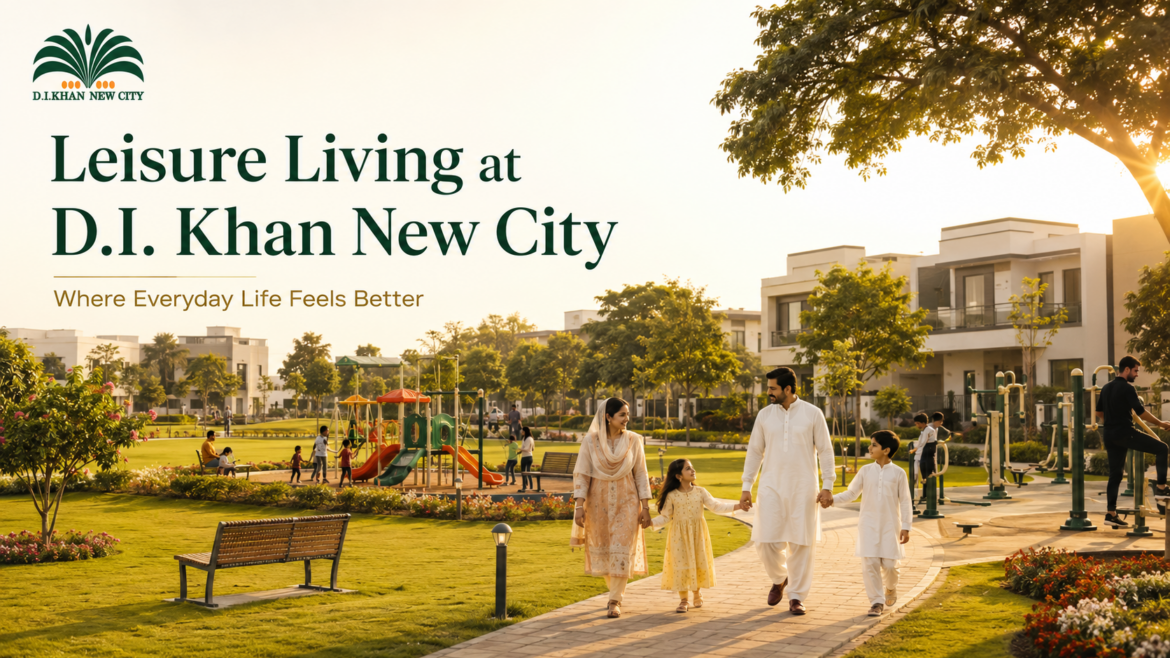
Residents can start their mornings with a walk, spend evenings outdoors and enjoy family activities within their own community. These simple experiences define the true value of modern living.

Green Spaces That Support Better Living

Green spaces improve both the appearance and atmosphere of a residential community. Landscaped parks, green belts and tree-lined surroundings create a refreshing escape from congested urban areas.

DIKNC places greenery at the heart of its lifestyle vision. Open areas can encourage residents to walk, exercise and spend more time outdoors. Children can enjoy active play, while adults can relax in peaceful surroundings.

Green planning also gives neighbourhoods a more attractive and welcoming character. Buyers increasingly value communities that provide breathing space, cleaner surroundings and a stronger connection with nature.

Recreation for the Whole Family

A modern community should meet the recreational needs of every age group. Children need safe play areas, young people look for active social spaces and adults appreciate comfortable places where they can relax.

The lifestyle vision of DIKNC includes:

  • Landscaped parks and green areas
  • Walking and jogging spaces
  • Family-friendly outdoor environments
  • Adventure and recreational facilities
  • Community gathering areas
  • Sports and wellness opportunities

Planned attractions such as the Adventure Club and safari-themed recreational experiences can introduce more exciting ways for families to enjoy their free time. These facilities can also strengthen community interaction and create memorable experiences for residents.

Security That Brings Peace of Mind

Families enjoy outdoor life more when they feel secure. Controlled entry, surveillance systems and round-the-clock security can give residents greater confidence throughout the day.

DIKNC aims to provide a gated living environment where families can enjoy evening walks, children can play outdoors and residents can follow their daily routines with greater peace of mind.

Security does more than protect property. It also supports freedom, comfort and confidence within the community. For many buyers, this advantage plays a major role when they choose a place for their family.

Everyday Convenience Close to Home

Long journeys for education, healthcare, shopping and routine services consume valuable family time. A well-planned community places important facilities within convenient reach.

DIKNC’s development vision includes educational institutions, healthcare facilities, commercial areas, an IT Park and a modern mall. These destinations can help residents manage their daily needs without repeatedly travelling to distant parts of the city.

Easy access to essential services can make everyday routines simpler and more efficient. It can also give families more time for relaxation, recreation and personal connection.

A Community That Encourages Connection

A fulfilling lifestyle depends on more than buildings and infrastructure. Strong communities give residents opportunities to interact, build relationships and develop a sense of belonging.

Parks, walking paths, recreational areas and shared facilities can bring neighbours together naturally. Parents can meet during outdoor activities, children can form friendships and families can take part in community life.

DIKNC combines private residential living with spaces that support positive social interaction. This balance can create a friendly environment where residents feel connected without sacrificing personal comfort.

Modern Infrastructure for Everyday Comfort

Reliable infrastructure plays an important role in modern community life. Wide roads, organised streets, utilities and digital connectivity can make daily routines smoother and more comfortable.

DIKNC plans to combine modern infrastructure with a clean and organised residential setting. The project’s broader vision also includes high-speed connectivity and smart-community features that can support education, business and modern family needs.

Good infrastructure improves daily life and strengthens the long-term appeal of a residential development.

How Lifestyle Amenities Can Support Property Value

Location and plot size remain important, but today’s buyers also examine security, infrastructure, green spaces and nearby facilities. A community that offers these advantages can attract both genuine homeowners and long-term investors.

As DIKNC continues its development and introduces more planned facilities, its lifestyle appeal may strengthen demand for residential and commercial property. A secure, attractive and well-connected environment can help a community maintain buyer interest over time.

Investors should always review official documents, development updates, plot location and payment terms before making a property decision.

Choose a Better Way of Living

The DIKNC lifestyle brings together security, greenery, recreation, convenience and community connection. It gives families the opportunity to enjoy peaceful surroundings without leaving behind the benefits of modern living.

Morning walks, family activities, organised neighbourhoods and nearby facilities can turn an ordinary residential location into a complete lifestyle destination.

D. I. Khan New City offers more than a place to build a home. It presents a vision for a healthier, more comfortable and more connected future.

Discover modern leisure living at D. I. Khan New City. Contact our team and book your plot today.

Chashma Road Development New Growth for Paharpur & DIKNC

Chashma Road Development New Growth for Paharpur & DIKNC

Chashma Road Development New Growth for Paharpur & DIKNC 1536 1024 D. I. Khan New City

The future of a region is often shaped by the roads that connect it.

Across Paharpur, ongoing development on the Chashma Road corridor is creating a visible sense of progress. Road construction, improved infrastructure and better regional access are gradually transforming the surrounding countryside into a more connected and investment-friendly area.

The development update shared by D. I. Khan New City highlights that work on the Chashma Road–Paharpur dualization project is progressing, with the aim of supporting smoother travel, stronger connectivity and broader economic activity across the region.

For residents, businesses and property investors, this is more than a road project. It represents the beginning of a new growth corridor—one that can positively influence the future of Paharpur and strengthen the strategic position of D. I. Khan New City.

Better Connectivity for Paharpur and Surrounding Areas

Reliable road infrastructure is essential for the development of any region. It allows people to travel more comfortably, helps businesses transport goods efficiently and connects rural communities with markets, healthcare, education and employment opportunities.

As the Chashma Road corridor improves, travel between Paharpur, Dera Ismail Khan and nearby settlements is expected to become more convenient. A wider and better-developed route can support safer traffic movement, reduce travel difficulties and improve access for residents of surrounding villages.

This connectivity can also attract more visitors, businesses and property buyers to the region.

Instead of being viewed as an outlying rural area, Paharpur can increasingly emerge as an accessible location with strong potential for residential, commercial and agricultural growth.

A Stronger Regional Growth Corridor

Road development rarely benefits only the vehicles travelling on it. Its economic impact often reaches nearby towns, villages, markets and property developments.

Improved access can encourage the establishment of:

  • Local shops and commercial centres
  • Restaurants and roadside services
  • Healthcare and educational facilities
  • Warehouses and distribution businesses
  • New housing and property projects
  • Employment opportunities for local communities

As movement along the corridor increases, land located near the road can gain greater visibility and accessibility. This may gradually increase demand for both residential and commercial property in the surrounding area.

Paharpur has also received wider attention in regional development discussions. An official Khyber Pakhtunkhwa government update reported that a CPEC interchange at Paharpur has been proposed, further highlighting the strategic importance of connectivity in the area.

These developments collectively create a more promising environment for long-term investment.

How This Development Benefits D.I. Khan New City

The location of D. I. Khan New City places it in a strong position to benefit from the growth of the Paharpur region.

A modern community becomes more attractive when it is connected through quality roads. Better access makes it easier for residents to commute, visitors to reach the project and businesses to serve the community.

The Chashma Road development can benefit D. I. Khan New City through:

Improved Accessibility

Better regional roads can make travelling to and from D. I. Khan New City easier for residents, property buyers and investors.

Convenient access is one of the most important factors influencing real estate demand. Buyers generally prefer communities that offer a peaceful environment without becoming disconnected from important urban and commercial areas.

Greater Project Visibility

As activity increases along the Chashma Road and Paharpur corridor, more people may become familiar with nearby property developments.

This increased movement can provide D. I. Khan New City with greater regional exposure and help attract buyers from Dera Ismail Khan, Paharpur, Chashma and surrounding areas.

Stronger Investment Potential

Real estate located near improving infrastructure often receives increased buyer interest.

Although property appreciation can never be guaranteed, better roads, stronger accessibility and growing commercial activity are widely considered positive factors for long-term property demand.

Early buyers may therefore benefit from securing property while the wider region continues to develop.

Supporting a Modern Community Lifestyle

D. I. Khan New City is being developed as more than a collection of residential plots. It is envisioned as a properly planned community where residents can enjoy security, essential facilities, green spaces and organised infrastructure.

According to the project’s Phase 1 information, planned and available facilities include:

  • 24-hour security and surveillance
  • Parks and mosques in different sectors
  • A 180-foot main boulevard
  • Schools, colleges and university facilities
  • High-speed internet
  • Underground sewerage infrastructure
  • Commercial areas
  • A water filtration plant

When these community features are supported by improved regional road access, the overall value proposition becomes stronger.

Families can enjoy a peaceful and organised residential environment while remaining connected to surrounding towns, markets and services.

New Possibilities for Commercial Investment

Improved roads can be especially valuable for commercial property.

As traffic increases and more families settle in the surrounding region, demand can grow for everyday services such as grocery stores, restaurants, clinics, schools, offices, banks and retail outlets.

Commercial areas inside D. I. Khan New City may benefit from both the society’s resident population and increasing activity across the wider Paharpur corridor.

For investors, this creates possibilities beyond purchasing residential property. Commercial plots may offer an opportunity to serve an expanding community while participating in the region’s economic growth.

Improving Opportunities for Local Communities

The benefits of development should extend beyond property owners.

Road construction and related infrastructure activity can create direct and indirect employment for local workers, contractors, transporters and suppliers. Once completed, improved connectivity can help farmers transport their produce, enable students to reach educational institutions and make healthcare more accessible.

Local businesses may also benefit from increased customer movement.

As D. I. Khan New City grows alongside the surrounding region, it can contribute to this transformation through employment, commercial activity and demand for local products and services.

This creates a relationship in which the project and the wider region support each other’s progress.

Why Infrastructure Matters to Property Buyers

A plot may be valuable because of its size, location or development status. However, its long-term appeal is also influenced by what is happening around it.

Before purchasing property, informed buyers usually consider:

  • Road access
  • Nearby development projects
  • Security and community planning
  • Availability of utilities
  • Commercial opportunities
  • Future population growth
  • Connectivity with major routes

The Chashma Road development adds an important advantage to the broader location of D. I. Khan New City.

It connects the project’s planned lifestyle with a region that is gradually becoming more accessible, active and economically significant.

Conclusion

The ongoing Chashma Road development represents more than improved asphalt and transportation. It is a foundation for stronger connectivity, economic activity and regional progress.

For Paharpur, the project can improve access, support local businesses and encourage new investment. For D. I. Khan New City, it strengthens location value, increases accessibility and enhances the project’s long-term appeal to homebuyers and investors.

As the region continues to develop, communities located near these improving routes are likely to receive greater attention.

What Is a Master-Planned Community?

What Is a Master-Planned Community?

What Is a Master-Planned Community? 1536 1024 D. I. Khan New City


The way people choose where to live is changing rapidly. Buyers are no longer looking for just a piece of land; they are searching for complete communities that offer security, convenience, lifestyle, and long-term value. This shift has made master-planned communities one of the fastest-growing trends in real estate worldwide.

In Dera Ismail Khan, this transformation is becoming increasingly visible, and D. I. Khan New City is at the forefront of this modern approach to urban development.

What Is a Master-Planned Community?

A master-planned community is a carefully designed residential development where roads, parks, schools, commercial areas, utilities, and recreational facilities are planned together from the beginning.

Unlike traditional housing developments, master-planned communities focus on creating a complete living experience. Residents enjoy better infrastructure, organized neighborhoods, and access to essential services within a single community.

This integrated approach enhances both quality of life and property value.

The Growing Demand for Modern Living

Today’s families want more than just a home. They want:

  • Safe and secure surroundings
  • Quality educational facilities
  • Healthcare services nearby
  • Green spaces and parks
  • Reliable infrastructure
  • Easy access to shopping and daily necessities

As urban areas continue to expand, communities that provide these features are becoming increasingly desirable.

D. I. Khan New City has been designed to meet these modern expectations by creating an environment where residents can live, work, and thrive.

Infrastructure That Supports Future Growth

One of the biggest factors influencing property appreciation is infrastructure.

Well-planned roads, organized sectors, underground utilities, and commercial zones contribute significantly to a community’s long-term success. D. I. Khan New City offers a modern urban layout designed to support future growth while maintaining comfort and convenience for residents.

Wide roads, green belts, security systems, and planned commercial districts create a foundation for sustainable development.

A Lifestyle Designed for Families

A successful housing society should enhance everyday life.

Imagine starting your morning with a peaceful walk through landscaped parks, dropping children at nearby educational institutions, shopping within the community, and spending evenings in recreational spaces with family.

This lifestyle is becoming increasingly important for homebuyers who value convenience and community living.

D. I. Khan New City is being developed with this vision in mind, offering residents a balanced environment that promotes comfort, wellness, and connectivity.

Security and Peace of Mind

Security remains one of the most important concerns for property buyers. A gated environment with controlled access, surveillance systems, and dedicated security measures provides residents with confidence and peace of mind. For families, this means children can enjoy outdoor spaces more freely while homeowners benefit from a safer living environment.

Communities that prioritize security often experience stronger demand and better long-term property performance.

Why Investors Prefer Master-Planned Communities

From an investment perspective, master-planned communities offer several advantages:

Higher Demand

Modern buyers actively seek organized communities with lifestyle amenities.

Better Property Appreciation

Infrastructure development often drives steady increases in property values.

Stronger Rental Potential

Well-developed communities attract professionals, families, and businesses.

Long-Term Stability

Planned developments typically maintain their appeal and market value over time.

These factors make master-planned communities attractive for both first-time buyers and experienced investors.

The Future of Real Estate in D. I. Khan

As Dera Ismail Khan continues to grow, demand for modern housing solutions is expected to increase. Communities that combine strategic planning, infrastructure, security, and lifestyle amenities will be best positioned to meet this demand.

D. I. Khan New City represents this new generation of development, offering a vision of modern living that aligns with the expectations of today’s families and tomorrow’s investors.

Final Thoughts

Real estate is no longer just about location—it is about lifestyle, planning, and future potential.

Master-planned communities provide residents with a better quality of life while creating opportunities for long-term investment growth. For those seeking a secure home, a thriving community, or a smart real estate investment, D. I. Khan New City offers a compelling opportunity to become part of D. I. Khan’s future.

Whether you are planning to build your dream home or secure a valuable investment, now is the time to explore the possibilities that modern community living can offer.


Why Early Investors Are Choosing D. I. Khan New City

Why Early Investors Are Choosing D. I. Khan New City

Why Early Investors Are Choosing D. I. Khan New City 1536 1024 D. I. Khan New City

Real estate has always rewarded those who invest before an area reaches its peak value. Across Pakistan, some of the most successful property investors are not the ones who buy last—they are the ones who identify growth corridors early and secure their assets before demand accelerates.

Today, D. I. Khan New City is attracting attention from investors, overseas Pakistanis, and families looking for a secure and modern community in southern Khyber Pakhtunkhwa. With rapid urban development, improved connectivity, and increasing demand for planned housing, many buyers are choosing to invest now rather than wait for future price increases.

A City Designed for the Future

Unlike traditional housing developments, D. I. Khan New City has been planned with a long-term vision. Wide roads, organized sectors, green spaces, modern infrastructure, and secure gated access create an environment that supports both quality living and sustainable property appreciation. Modern buyers are no longer looking for land alone. They want a complete lifestyle that includes convenience, security, education, healthcare, recreation, and commercial opportunities. D. I. Khan New City has been designed around these evolving expectations.

Strategic Location Creating Long-Term Value

Location remains one of the most important factors influencing property prices.

D. I. Khan New City benefits from its strategic position near major transportation routes connecting different parts of the region. As infrastructure projects continue to improve accessibility and economic activity expands, properties located in well-planned communities are expected to experience stronger demand. For investors, this means the opportunity to enter the market before future development fully impacts property values.

Why Possessionable Plots Matter

One of the biggest concerns for property buyers is uncertainty regarding development and possession timelines. Possessionable plots offer a significant advantage because buyers can immediately see existing infrastructure, road networks, and ongoing development. This reduces investment risk and provides greater confidence in the project’s future.

For families planning to build their homes, possessionable plots provide the flexibility to begin construction according to their own timeline. For investors, they represent a tangible asset with stronger resale potential.

Growing Demand for Gated Communities

Across Pakistan, the demand for gated communities continues to increase.

Families are prioritizing:

  • 24/7 security and surveillance
  • Organized urban planning
  • Parks and green spaces
  • Educational facilities
  • Healthcare services
  • Reliable infrastructure
  • Community-focused living

These features not only improve quality of life but also contribute to higher property demand over time. D. I. Khan New City is positioned to meet these expectations by offering a modern residential environment designed for future generations.

A Strong Opportunity for Overseas Pakistanis

Overseas Pakistanis are increasingly seeking investment opportunities that combine security, transparency, and long-term growth potential.

A professionally planned housing community provides confidence that their investment is backed by visible development and structured planning. As D. I. Khan continues to expand, property ownership within a modern community can become an important long-term asset for families living abroad.

Future Infrastructure and Commercial Growth

Property values are often influenced by nearby commercial activity and supporting infrastructure. As educational institutions, healthcare facilities, commercial zones, recreational attractions, and technology-focused developments continue to emerge, the overall attractiveness of a community increases.

The vision behind D. I. Khan New City focuses on creating a self-sustaining urban environment where residents can live, work, learn, and invest within a single integrated community.

Why Acting Early Matters

Many investors wait for a project to become widely recognized before making a purchase. By that stage, prices often reflect the increased demand.

Early investors benefit from:

  • Better plot selection
  • Greater growth potential
  • Lower entry costs
  • Increased resale opportunities
  • Long-term capital appreciation

As available inventory becomes more limited, buyers who act early are typically in a stronger position to benefit from future market growth.

Conclusion

D. I. Khan New City represents more than a residential project—it represents a vision for the future of modern living in Dera Ismail Khan. With possessionable plots, modern infrastructure, secure community planning, and strong long-term growth potential, it continues to attract investors who understand the value of entering a market before the next wave of development arrives. For those seeking a blend of lifestyle, security, and investment opportunity, now may be the ideal time to secure a place in one of the region’s most promising communities.

How Modern Amenities Increase Property Value in DIKNC

How Modern Amenities Increase Property Value in DIKNC

How Modern Amenities Increase Property Value in DIKNC 1672 941 D. I. Khan New City

Buying property is no longer just about purchasing land. Today, smart buyers look for a complete lifestyle, secure surroundings, future growth, and long-term value. This is where D. I. Khan New City stands out as one of the most promising real estate destinations in Dera Ismail Khan.

Developed as a modern urban community, D. I. Khan New City is designed to offer more than plots. It offers a premium lifestyle supported by security, education, healthcare, commercial activity, green spaces, and sustainable infrastructure. These features play a major role in increasing property demand and future value.

Why Amenities Matter in Real Estate Investment

In real estate, location is important. However, amenities are what make a location more valuable over time. A housing society with strong infrastructure, family-friendly facilities, commercial zones, and security naturally attracts more buyers.

When demand increases, property value also improves. This is why investors today prefer communities that offer a complete lifestyle instead of undeveloped land.

D. I. Khan New City follows this modern approach. The project is backed by a vision of quality, sustainability, and community well-being, with the aim of setting new benchmarks in urban development.

24/7 Security: A Key Factor for Families and Investors

Security is one of the biggest concerns for modern families. A safe living environment increases buyer confidence and makes a housing society more desirable.

D. I. Khan New City offers 24-hour security, CCTV surveillance, and gated access points to create a secure environment for residents.

For families, this means peace of mind. For investors, it means stronger market appeal. A secure gated community is always easier to promote, easier to sell, and more attractive for long-term buyers.

Parks and Green Spaces Add Lifestyle Value

Green spaces are no longer a luxury. They are now an essential part of healthy urban living.

D. I. Khan New City includes parks in residential sectors with jogging tracks, landscaping, and family-friendly outdoor areas. The society also plans parks designed for women, giving residents more comfort and accessibility.

These spaces improve the daily lifestyle of residents. They also increase the visual appeal of the community, making the area more attractive for future buyers.

Education Facilities Make Communities More Desirable

Families prefer to live close to quality education. When schools and colleges are available within or near a community, the demand for residential property increases.

D. I. Khan New City’s Educational Square is planned to include schools and colleges in a safe environment, allowing parents to keep their children close to home while accessing quality education.

This adds long-term value because education-focused communities attract families who want stability, convenience, and a better future for their children.

Healthcare Facilities Strengthen Buyer Confidence

Healthcare access is another major factor that improves the value of a residential project. A community with medical support feels safer and more complete.

D. I. Khan New City includes plans for modern hospitals and clinics with healthcare services such as emergency care, specialist consultations, and diagnostic labs.

For residents, this means convenience. For investors, it creates a stronger selling point because healthcare access is one of the top priorities for families.

IT Park: A Step Toward Future Growth

One of the most powerful features of D. I. Khan New City is its planned Information Technology Park. The IT Park is designed to support science, technology, and innovation-related firms.

This adds a future-focused identity to the project. As technology and digital businesses grow in Pakistan, communities with IT infrastructure can attract professionals, startups, and commercial activity.

For investors, this means future employment potential, rental demand, and stronger property appreciation.

Commercial Square: Creating Business and Investment Opportunities

A successful housing society needs strong commercial activity. Shops, offices, malls, restaurants, and business spaces help create a complete ecosystem.

D. I. Khan New City’s Commercial Square is planned as a modern business hub, with inspiration taken from Downtown Dubai. Its strategic location and proximity to CPEC are highlighted as key factors for commercial growth.

This makes the project attractive not only for residential buyers but also for business owners and investors looking for future commercial opportunities.

Lifestyle Facilities Create Premium Demand

Modern buyers want a community where they can live, relax, shop, socialize, and entertain their families.

D. I. Khan New City includes lifestyle-focused amenities such as:

Adventure Club
Community Club
Sports Facilities
Animal Safari
Theme Park
New City Mall
Lakeside eateries

These facilities create a premium living experience and make the society more attractive for families seeking comfort and recreation.

When a project offers lifestyle value, it becomes more than a place to live. It becomes a destination.

Sustainability Adds Long-Term Value

Sustainable planning is becoming one of the most important features in modern real estate. Communities that focus on water conservation, clean energy, waste management, and green development are better prepared for the future.

D. I. Khan New City highlights sustainability through solar energy systems, water filtration, rainwater harvesting, solid waste management, sewerage treatment, and drip irrigation for green spaces.

This strengthens the project’s long-term value because eco-friendly communities are becoming more attractive to educated buyers, overseas Pakistanis, and serious investors.

Utilities That Support Modern Living

A premium housing society must offer basic convenience with modern infrastructure.

D. I. Khan New City is planned with standard urban utilities, including high-speed internet, phone lines, water, and power supply.

These features make daily life easier and help position the project as a modern, future-ready community.

Why This Matters for Property Value

Amenities directly influence real estate demand. When a society offers security, healthcare, education, commercial zones, green spaces, utilities, and lifestyle attractions, more people want to live there.

This increased demand can lead to stronger resale potential and better long-term appreciation.

For buyers, D. I. Khan New City offers a secure and comfortable lifestyle. For investors, it offers a chance to enter a growing community with strong future potential.

Final Thoughts

D. I. Khan New City is not just selling plots. It is building a complete lifestyle destination for families, professionals, businesses, and investors.

With modern amenities, sustainable planning, secure surroundings, and strong development vision, D. I. Khan New City is shaping the future of premium living in Dera Ismail Khan.

For anyone looking for a smart real estate investment with lifestyle value, D. I. Khan New City offers a powerful opportunity to secure tomorrow’s growth today.

Book your plot today and become part of D. I. Khan New City — The Crown of Pakistan.

X
Welcome to D. I. Khan New City