[mwai_chatbot id="default"]

#RealEstatePakistan

Why April 2026 Is the Best Time to Invest in D. I. Khan New City

Why April 2026 Is the Best Time to Invest in D. I. Khan New City

Why April 2026 Is the Best Time to Invest in D. I. Khan New City 1600 881 D. I. Khan New City

April 2026 marks a turning point for Pakistan’s real estate market. After years of uncertainty, the sector is entering a recovery phase driven by improved economic stability, renewed investor confidence, and supportive government policies.

For investors and homebuyers, this moment presents a rare opportunity. Among emerging destinations, D. I. Khan New City (DIKNC) stands out as a high-potential investment hub—offering affordability, planning, and long-term growth prospects.

A Market Entering Recovery Mode

Pakistan’s real estate sector is shifting from stagnation to growth. Recent developments—including improved regional stability and investor-friendly policies—have restored confidence in the market.

This transition is important because early-stage recovery periods often offer the best entry points for investors. Property prices are still relatively low, but demand is steadily increasing.

Game-Changing Mortgage Opportunities

One of the biggest drivers of this recovery is the introduction of new housing finance programs.

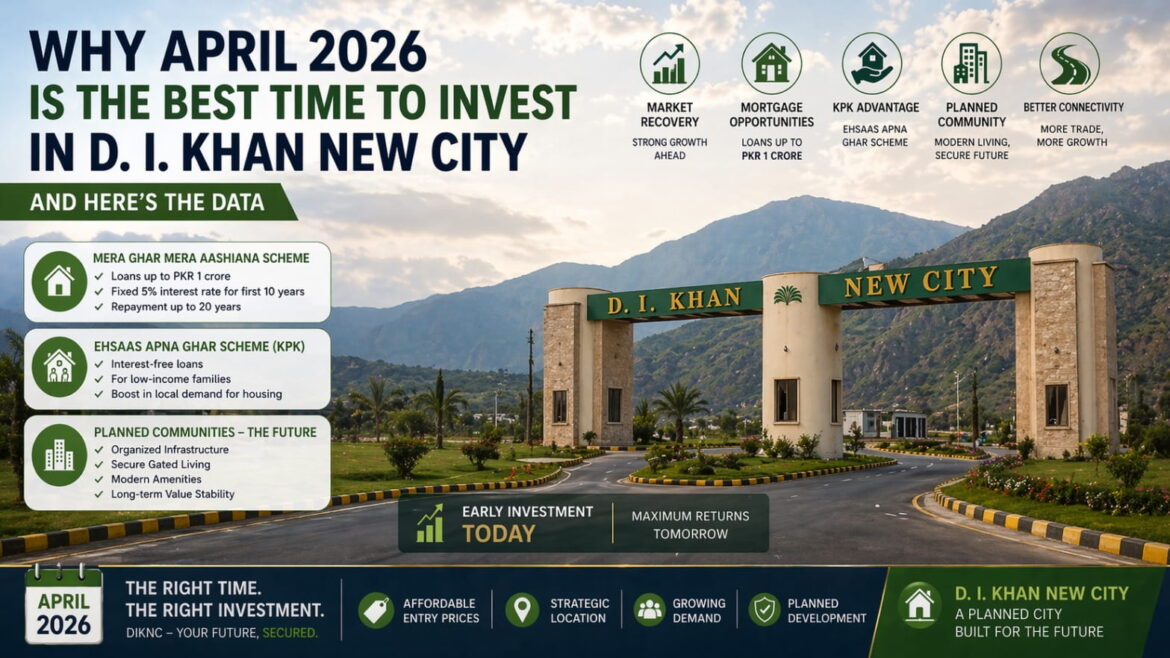
Mera Ghar Mera Aashiana Scheme

The government has launched a mortgage initiative offering:

  • Loans up to PKR 1 crore
  • Fixed 5% interest rate for the first 10 years
  • Repayment tenure of up to 20 years

This makes owning a home more accessible than ever. Monthly installments are now comparable to rental costs, encouraging renters to shift toward ownership.

KPK’s Local Advantage for DIKNC

Since D. I. Khan New City is located in Khyber Pakhtunkhwa, it directly benefits from regional initiatives.

Ehsaas Apna Ghar Scheme

  • Interest-free loans for low-income families
  • Focus on increasing homeownership
  • Boost in local demand for residential plots

This creates a strong foundation for real estate growth in D. I Khan, making D. I. Khan New City an attractive option for both investors and end-users.

Shift Toward Planned Communities

In 2026, buyers are moving away from speculative investments and focusing on real, livable developments.

Planned communities like D. I. Khan New City offer:

  • Organized infrastructure
  • Secure gated living
  • Access to modern amenities
  • Long-term value stability

This trend aligns perfectly with DIKNC’s vision, positioning it ahead of traditional, unplanned developments.

Strategic Impact of Regional Connectivity

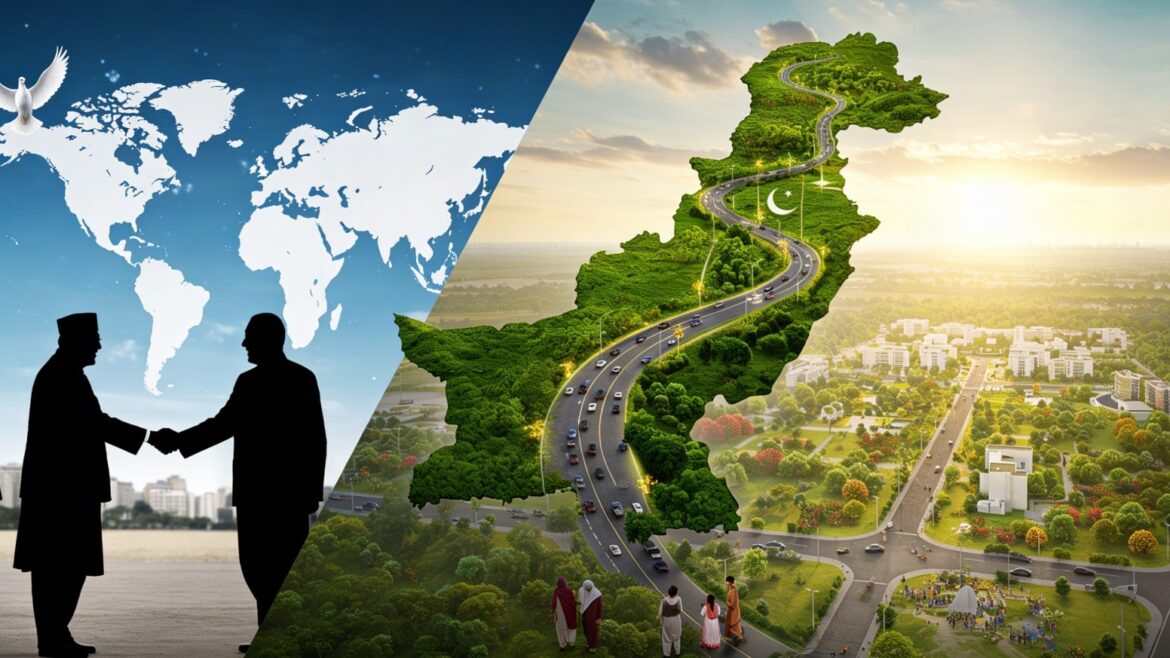
Recent diplomatic and economic engagements between Pakistan and neighboring countries are expected to enhance regional connectivity and trade.

For D. I. Khan, this means:

  • Increased economic activity
  • Improved infrastructure development
  • Greater investor interest

As connectivity improves, areas like D. I. Khan New City are likely to experience rising property demand and value appreciation.

Why DIKNC Is a Long-Term Investment Opportunity

D. I. Khan New City offers a unique combination of:

  • Affordable entry prices
  • Strategic location
  • Growing demand
  • Planned development

As the market recovers, early investors are positioned to benefit the most. With increasing opportunities and infrastructure growth, D. I. Khan New City is not just a short-term investment—it is a long-term value asset.

Conclusion

April 2026 presents a rare window of opportunity in Pakistan’s real estate market. With supportive government policies, regional development, and shifting buyer preferences, the conditions are ideal for investment.

D. I. Khan New City stands at the center of this transformation—offering a chance to invest in a project designed for the future.

For those looking to secure a valuable asset, the time to act is now.

Peace Brings Progress What It Means for D. I. Khan New City

Peace Brings Progress What It Means for D. I. Khan New City

Peace Brings Progress What It Means for D. I. Khan New City 1600 873 D. I. Khan New City

Peace is more than just the absence of conflict—it is the foundation of progress. When nations move toward stability through diplomacy and cooperation, the effects ripple far beyond borders. From international trade to economic confidence, global peace creates an environment where countries like Pakistan can grow, invest, and thrive.

Efforts led by organizations like the United Nations show how dialogue and cooperation reduce tensions and unlock new opportunities for development. As global stability improves, it paves the way for stronger economies and better infrastructure worldwide.

The National Impact: Growth Through Stability

For Pakistan, peace plays a vital role in shaping economic and social progress. Stability attracts foreign investment, strengthens industries, and enhances connectivity across regions.

Projects such as the China-Pakistan Economic Corridor highlight how international collaboration can transform economic potential into real growth. Improved infrastructure, energy resources, and trade routes create a strong foundation for sustainable development. A peaceful environment also enables the country to focus on long-term priorities like education, healthcare, and modern urban planning.

Local Development: The Rise of D. I. Khan New City

The true impact of peace becomes most visible at the local level. Developments like D. I. Khan New City are a reflection of how stability fuels progress, bringing modern infrastructure, organized planning, and investment opportunities to emerging regions.

When peace prevails:

  • Investors gain confidence to build and expand
  • Real estate markets grow steadily
  • Infrastructure projects accelerate
  • Communities enjoy a higher quality of life

This transformation goes beyond construction—it creates a lifestyle where people can live with security, convenience, and long-term vision.

Building the Future in a Peaceful Environment

D. I. Khan New City represents a forward-thinking approach to urban living. With planned development, modern facilities, and a focus on sustainability, it showcases how peaceful conditions enable smart and organized communities to thrive.

Such developments offer:

  • Planned and secure living
  • Modern infrastructure and amenities
  • Attractive investment opportunities

They stand as a testament to how global and national peace efforts translate into real benefits at the community level.

Why Peace Matters for the Future

Peace is not just a global goal—it directly impacts everyday life. It shapes:

  • Economic growth
  • Community well-being
  • Urban expansion
  • Future opportunities

Without stability, development slows. With peace, growth becomes limitless.

Conclusion: Progress Begins with Peace

From global diplomacy to local development, every step toward peace creates new possibilities. As the world moves forward together, projects like D. I. Khan New City highlight how stability can transform regions into thriving, modern communities.

FBR to Reassess Real Estate Taxes – A Major Relief for Pakistan

FBR to Reassess Real Estate Taxes – A Major Relief for Pakistan

FBR to Reassess Real Estate Taxes – A Major Relief for Pakistan 1280 605 D. I. Khan New City

The Federal Board of Revenue (FBR) has taken a significant step toward revitalizing Pakistan’s real estate and construction industry. In response to rising concerns over high transaction taxes, FBR Chairman Rashid Mahmood has agreed in principle to reassess and potentially reduce taxation on property sales and purchases. This move is expected to boost property transactions, encourage affordable housing, and stimulate overall market activity.

FBR’s Plan to Reduce High Real Estate Taxes

During a key meeting of the Taxation-Task Force for Housing Sector Development, industry stakeholders raised alarms over the excessive tax burden imposed under Sections 236C and 236K of the Income Tax Ordinance 2001. Combined with 5% Federal Excise Duty (FED) and 4% provincial stamp duty, the overall tax impact on a single property transaction reaches a staggering 13%, discouraging investments.

The FBR Chairman acknowledged the concerns and agreed to reevaluate these taxes, emphasizing the possible reduction of the 5% FED, provided that provincial governments do not increase their respective real estate taxes.

Tax Incentives for First-Time Homebuyers & Affordable Housing

To further support affordable housing and encourage first-time homebuyers, a committee led by the Member Policy FBR has been established. The committee will draft actionable recommendations for rationalizing federal and provincial property taxes.

Key Committee Members:

  • Sardar Tahir Mehmood – President, Federation of Realtors Pakistan
  • Maj General Aamir Aslam – Chairman, NAPHDA
  • Hafiz Mian M. Nauman – Ex-MPA
  • Waseem Hayat Bajwa – DDG, Policy & Planning Wing, MoH&W
  • Ahsan Malik – Real Estate Analyst

This committee will play a crucial role in structuring tax relief measures and ensuring a balanced approach that benefits both investors and homebuyers.

Aligning Property Valuations with Market Rates

Another significant concern addressed was the discrepancy in property valuation rates. The FBR Chairman proposed an annual review of valuation rates, in collaboration with provincial governments and Inland Revenue Operations, to bring them in line with actual market values. This step will enhance transparency and fairness in property assessments.

Facilitating Overseas Pakistanis in Real Estate Investments

Recognizing the challenges faced by overseas Pakistanis in property transactions, the FBR Chairman proposed an online verification system in collaboration with NADRA. This initiative aims to minimize reliance on field offices and simplify property-related procedures for non-resident Pakistanis.

Revisiting Section 7E and Idle Plots Taxation

A heated debate centered around the income tax on deemed income under Section 7E, which affects idle properties. While the FBR clarified that this tax does not apply to income-generating properties, concerns were raised regarding its impact on undeveloped plots. The Chairman agreed to review and refine the tax framework to prevent double taxation and undue burdens on property owners.

Strengthening Oversight & Digitalization in Real Estate

To promote greater transparency and compliance, the Directorate General of Designated Non-Financial Business and Professions (DNFBPs) will be strengthened with additional resources. Furthermore, a comprehensive digitalization strategy is under discussion to streamline operations and reduce bureaucratic inefficiencies.

Finalized Tax Relief Package – What to Expect?

Real estate experts are optimistic that the finalized tax incentive package, set to be announced in February 2025, will provide substantial relief to the industry. The proposed reforms are expected to include:

  • Lower transaction taxes
  • Incentives for affordable housing projects
  • Measures to attract real estate investments

Conclusion:

The FBR’s decision to reassess real estate taxes marks a turning point for the construction sector. By addressing high transaction costs, valuation discrepancies, and overseas investment hurdles, these reforms could revive property market activity and encourage sustainable growth. Stakeholders eagerly await the official announcement and finalization of the tax relief package.

X
Welcome to D. I. Khan New City