#PakistanAgriculture

Smart Farming in Pakistan

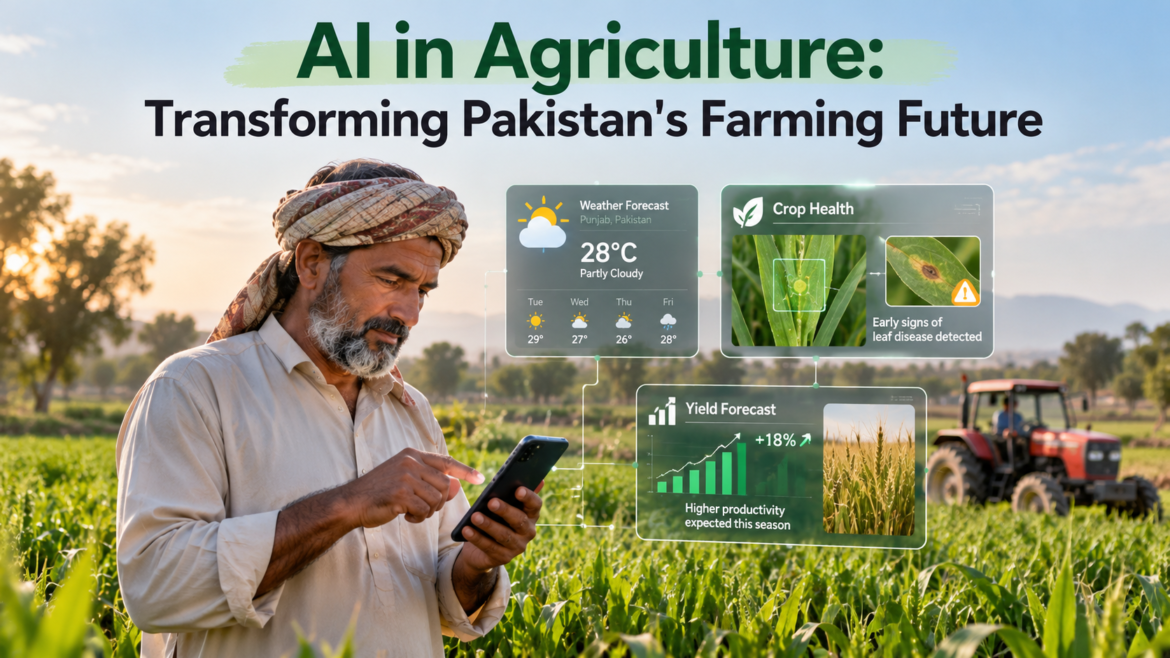
AI in Agriculture Transforming Pakistan’s Farming Future

AI in Agriculture Transforming Pakistan’s Farming Future 1672 941 D. I. Khan New City

Pakistan’s agricultural sector is preparing for a technological shift as the Punjab government plans to introduce artificial intelligence (AI) into farmers’ daily lives. This initiative aims to help farmers forecast crop yields, improve productivity, and make smarter agricultural decisions.

According to The Express Tribune, Parliamentary Secretary Osama Leghari shared this vision during the Pakistan Agricultural Coalition’s Agri Connections Conference and Expo on October 1, 2026.

The announcement highlights the growing importance of AI in agriculture in Pakistan and its potential to modernize traditional farming practices.

How Artificial Intelligence Could Change Farming

Agriculture is a vital part of Pakistan’s economy, supporting millions of livelihoods. However, unpredictable weather, inefficient resource management, and rising production costs continue to challenge farmers.

Artificial intelligence could help address some of these issues by transforming agricultural data into practical insights.

Potential benefits of AI-powered farming include:

  • Crop Yield Forecasting: AI tools can analyze weather patterns, soil conditions, and historical data to estimate crop production.
  • Smart Irrigation: Data-driven systems can help farmers use water more efficiently.
  • Early Crop Disease Detection: AI-supported image analysis may identify signs of crop diseases and pest damage.
  • Improved Farm Planning: Digital insights can support better decisions about planting, harvesting, and resource allocation.

These technologies could make smart farming in Pakistan more efficient and sustainable, particularly if affordable solutions become accessible to small-scale farmers.

Punjab Government Focuses on Agricultural Innovation

Speaking at the conference, Osama Leghari emphasized the provincial government’s commitment to data and technological advancement.

He expressed hope that farmers would eventually gain access to AI-based tools capable of predicting agricultural yields and productivity.

The government has also declared the Year of the Value Chain, focusing attention on the broader challenges farmers face when purchasing supplies, transporting produce, and accessing markets.

This approach recognizes that agricultural progress involves more than increasing production. Improving the entire agricultural value chain is equally important for farmers’ financial sustainability.

Opportunities and Challenges for Pakistani Farmers

The adoption of artificial intelligence in farming could open new opportunities for farmers across Punjab and other agricultural regions of Pakistan.

However, successful implementation will require reliable internet connectivity, affordable digital tools, farmer training, and access to accurate agricultural data.

Making these technologies available in local languages could also encourage wider adoption, especially in rural communities.

While the announcement outlines the government’s ambitions, the reported initiative has not yet established a confirmed rollout schedule or specific AI services.

A Smarter Future for Pakistan’s Agriculture

The integration of AI into farming represents a promising opportunity to improve Pakistan’s agricultural productivity and strengthen decision-making.

By combining traditional agricultural experience with emerging technologies, farmers could gain better control over crop planning, resource utilization, and production risks.

As Pakistan explores digital agriculture, AI could become an important tool for building a more productive, resilient, and sustainable farming future.

Pakistan Emerges as the 3rd Largest Sesame Exporter Globally

Pakistan Emerges as the 3rd Largest Sesame Exporter Globally

Pakistan Emerges as the 3rd Largest Sesame Exporter Globally 2048 1070 D. I. Khan New City

Pakistan has achieved a remarkable achievement by becoming the third-largest exporter of sesame in the world, with its exports now worth more than $1 billion. This outstanding accomplishment underscores the increasing importance of sesame within the nation’s financial landscape, propelled by vigorous agrarian policies and avant-garde cultivation methods.

Sesame Industry Growth in Pakistan

The sesame sector in Pakistan has undergone remarkable expansion in the previous five years.

  • 455% increase in production, now reaching 119 million tons annually.
  • 366% rise in export value, totaling $1.073 billion.

This improvement comes from the National Oilseeds Improvement Project (NOILP) and teamwork between national and state farming agencies.

Key Factors Driving Success

1.      Government Initiatives:

    • Policies encouraging oilseed production.
    • Financial support to farmers.

2.      Improved Farming Techniques:

    • Adoption of modern mechanization and irrigation methods.
    • Enhanced seed quality and yield.

3.      International Partnerships:

Pakistan and Turkey recently agreed a pact to enhance farming collaboration in machinery, fish farming, and crop watering. This partnership aims to enhance trade relations and introduce advanced farming technologies.

Sesame: A Game-Changer for the Economy

Sesame has become a key contributor to Pakistan’s agricultural economy, providing substantial opportunities for:

  • Farmers: Increased production and better income.
  • Trade: Strengthened global market presence.
  • Economy: Boosted agricultural export revenues.

Conclusion

  • Pakistan’s rise as the third-largest sesame exporter globally underscores its agricultural potential and commitment to sustainable growth. Strategic policies, international collaborations, and advancements in farming techniques have driven this success.
  • With such achievements, Pakistan is not only boosting its economy but also cementing its position as a global leader in sesame exports. The future of Pakistan’s sesame industry shines bright, paving the way for continued prosperity.
Pakistan Achieves Record-Breaking $4 Billion in Rice Exports in 2024

Pakistan Achieves Record-Breaking $4 Billion in Rice Exports in 2024

Pakistan Achieves Record-Breaking $4 Billion in Rice Exports in 2024 1360 930 D. I. Khan New City

For the first time ever, Pakistan reached an important goal by exporting $4 billion worth of rice in 2024. This big accomplishment shows how strong Pakistan’s farming industry is becoming, with rice—especially the famous basmati kind—leading the way. The Special Investment Facilitation Council (SIFC) was very important in making this happen, by encouraging new farming methods and more investments in agriculture.

The Role of Pakistan’s Basmati Rice in the Global Market

Pakistan’s basmati rice has always been famous for its high quality, which makes it very popular in other countries. This rice is known for its special smell and long grains, and it’s used in many kitchens around the world. Because of this growing demand, Pakistan’s rice industry has grown a lot, helping the country become a big player in international trade.
In 2024, the increase in rice exports was mostly because more people wanted Pakistan’s basmati rice. By working on better seeds, farming methods, and new research, the country was able to produce more rice.

SIFC’s Role in Agricultural Growth

The Special Investment Facilitation Council (SIFC) has played a key role in Pakistan’s successful agriculture sector. By helping with investments and creating opportunities for farmers, the SIFC has increased crop production and improved the quality of the crops. This has allowed Pakistan to meet growing international demand while also making its own agriculture sector stronger.
Shahjahan Malik, who used to lead the Rice Exporters Association of Pakistan, is very positive about this success. He thinks that reaching $4 billion in exports is just the start, and there’s potential for even more success in the future. Malik has set a big goal of $5 billion in rice exports for next year. He believes this can be achieved by researching better seeds and encouraging better farming methods.

The Road Ahead: $5 Billion in Rice Exports

To reach the goal of exporting $5 billion worth of rice, Pakistan needs to keep working on new and better ways to farm that also help the environment. This includes supporting research for better seed types, improving farming equipment, and teaching farmers how to grow rice more effectively. With the world wanting more of Pakistan’s rice, the country is in a good place to meet this need and sell even more of its farm products.

Conclusion: A Bright Future for Pakistan’s Rice Industry

Pakistan’s success in exporting rice shows how important innovation, investment, and smart planning can be. Thanks to the work of the SIFC and the constant demand for high-quality basmati rice, Pakistan is moving towards even bigger achievements. With a goal of reaching $5 billion in rice exports, the future of Pakistan’s farming industry looks very promising.

X
Welcome to D. I. Khan New City