#ArtificialIntelligence

Smart Farming in Pakistan

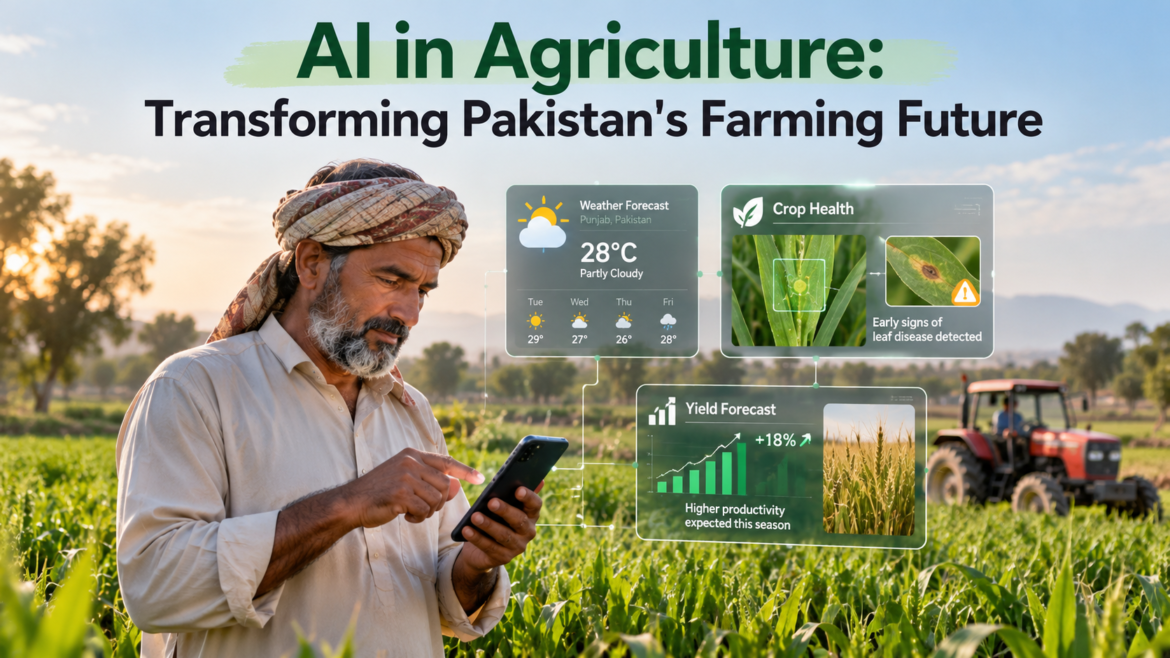
AI in Agriculture Transforming Pakistan’s Farming Future

AI in Agriculture Transforming Pakistan’s Farming Future 1672 941 D. I. Khan New City

Pakistan’s agricultural sector is preparing for a technological shift as the Punjab government plans to introduce artificial intelligence (AI) into farmers’ daily lives. This initiative aims to help farmers forecast crop yields, improve productivity, and make smarter agricultural decisions.

According to The Express Tribune, Parliamentary Secretary Osama Leghari shared this vision during the Pakistan Agricultural Coalition’s Agri Connections Conference and Expo on October 1, 2026.

The announcement highlights the growing importance of AI in agriculture in Pakistan and its potential to modernize traditional farming practices.

How Artificial Intelligence Could Change Farming

Agriculture is a vital part of Pakistan’s economy, supporting millions of livelihoods. However, unpredictable weather, inefficient resource management, and rising production costs continue to challenge farmers.

Artificial intelligence could help address some of these issues by transforming agricultural data into practical insights.

Potential benefits of AI-powered farming include:

  • Crop Yield Forecasting: AI tools can analyze weather patterns, soil conditions, and historical data to estimate crop production.
  • Smart Irrigation: Data-driven systems can help farmers use water more efficiently.
  • Early Crop Disease Detection: AI-supported image analysis may identify signs of crop diseases and pest damage.
  • Improved Farm Planning: Digital insights can support better decisions about planting, harvesting, and resource allocation.

These technologies could make smart farming in Pakistan more efficient and sustainable, particularly if affordable solutions become accessible to small-scale farmers.

Punjab Government Focuses on Agricultural Innovation

Speaking at the conference, Osama Leghari emphasized the provincial government’s commitment to data and technological advancement.

He expressed hope that farmers would eventually gain access to AI-based tools capable of predicting agricultural yields and productivity.

The government has also declared the Year of the Value Chain, focusing attention on the broader challenges farmers face when purchasing supplies, transporting produce, and accessing markets.

This approach recognizes that agricultural progress involves more than increasing production. Improving the entire agricultural value chain is equally important for farmers’ financial sustainability.

Opportunities and Challenges for Pakistani Farmers

The adoption of artificial intelligence in farming could open new opportunities for farmers across Punjab and other agricultural regions of Pakistan.

However, successful implementation will require reliable internet connectivity, affordable digital tools, farmer training, and access to accurate agricultural data.

Making these technologies available in local languages could also encourage wider adoption, especially in rural communities.

While the announcement outlines the government’s ambitions, the reported initiative has not yet established a confirmed rollout schedule or specific AI services.

A Smarter Future for Pakistan’s Agriculture

The integration of AI into farming represents a promising opportunity to improve Pakistan’s agricultural productivity and strengthen decision-making.

By combining traditional agricultural experience with emerging technologies, farmers could gain better control over crop planning, resource utilization, and production risks.

As Pakistan explores digital agriculture, AI could become an important tool for building a more productive, resilient, and sustainable farming future.

Pakistan’s First Driverless Car Marks a New Era in AI Innovation

Pakistan’s First Driverless Car Marks a New Era in AI Innovation

Pakistan’s First Driverless Car Marks a New Era in AI Innovation 1000 424 D. I. Khan New City

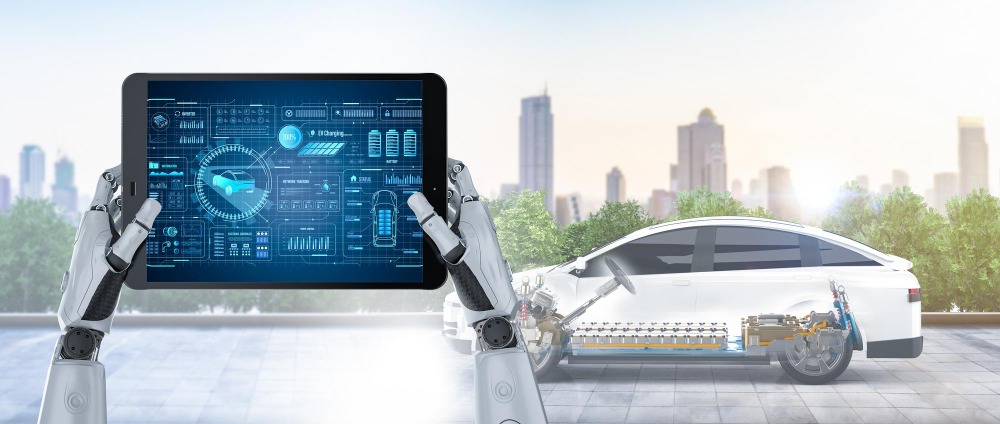
Pakistan has taken a major leap toward the future of mobility. Engineers at NED University of Engineering and Technology have successfully conducted the test drive of the country’s first AI-powered driverless car, setting a groundbreaking milestone in Pakistan’s technology and automotive sectors.

During the trial run, the autonomous vehicle moved smoothly across the NED campus roads, surprising students, visitors, and faculty with its ability to operate without human control.


A Year of Research, Engineering & AI Development

The project was developed at the National Centre for Artificial Intelligence (NCAI) within NED University’s Department of Computer and Information Sciences. The engineering team spent a full year transforming a China-imported electric vehicle into a fully autonomous system.

To convert the car into a driverless vehicle, developers integrated:

  • Artificial Intelligence (AI)
  • Advanced robotics
  • Mapping and localization tools
  • Computer vision
  • Radar sensors
  • AI-driven algorithms

This combination enabled the vehicle to navigate, recognize objects, and respond to its surroundings.


Steering Control, Object Detection & Autonomous Navigation

According to Dr. Muhammad Khurram, Director of the National Centre for Artificial Intelligence and the project lead, the car has now reached a mature stage of testing after extensive development cycles.

The system currently includes:

  • AI steering control
  • Radar and computer-vision enhancements
  • Object and obstacle detection
  • Lane recognition
  • Speed-limit detection
  • Traffic signal identification

Additionally, the car maintains an internal safety speed of 15–20 km/h, making it ideal for controlled testing on university grounds. It can also turn autonomously and judge incoming traffic.

Team member Inzimam Khan highlighted that this vehicle is uniquely designed to handle Pakistan’s challenging road conditions, including uneven surfaces, unexpected obstacles, and irregular traffic patterns. Its high-resolution sensors and AI-powered perception systems give it an edge over many global prototypes.


A Project That Spans Leadership and Vision

The driverless car project began under the leadership of former Vice Chancellor Prof. Dr. Sarosh Hashmat Lodhi and has seen major progress under the current Vice Chancellor Prof. Dr. Tufail Ahmed.

Their combined support reflects NED University’s continued commitment to innovation, research, and technological advancement.


A Major Step Toward Pakistan’s Autonomous Future

The successful test of this AI-powered driverless car is more than just a technological achievement — it represents Pakistan’s growing capabilities in:

  • Autonomous vehicle systems
  • Artificial intelligence research
  • Robotics and automation
  • Smart mobility solutions

As engineers continue to refine object detection, traffic interpretation, and full autonomy systems, Pakistan is moving closer to joining the global race for intelligent transportation and self-driving innovation.

China’s AI Breakthrough DeepSeek Surpasses ChatGPT in 7 days

China’s AI Breakthrough DeepSeek Surpasses ChatGPT in 7 days

China’s AI Breakthrough DeepSeek Surpasses ChatGPT in 7 days 960 540 D. I. Khan New City

China’s AI industry has made a groundbreaking advancement with the launch of DeepSeek AI, a model that has outpaced ChatGPT in just seven days. Developed at a significantly lower cost, DeepSeek AI’s rapid success is shaking up the global AI landscape and challenging tech giants like Nvidia and OpenAI.

What Sets DeepSeek AI Apart?

DeepSeek AI stands out for its cost-effective development, utilizing fewer high-end computing chips while still delivering top-tier performance. Unlike models that rely on expensive AI hardware, DeepSeek demonstrates that innovation and efficiency can go hand in hand. This breakthrough has placed immense pressure on companies dependent on premium AI chips, signaling a major shift in the industry.

Impact on the Global AI Industry

The sudden rise of DeepSeek AI has led to significant consequences in the tech world:

  • Nvidia’s stock drop:

    The success of DeepSeek AI caused a $600 billion decline in Nvidia’s stock value, emphasizing the disruptive potential of this new AI model.

  • China’s push for tech independence:

    With U.S. restrictions on advanced semiconductor chips, China is striving for self-sufficiency in AI development. DeepSeek AI’s rapid success underscores the nation’s ability to innovate despite global challenges.

  • Increased competition:

    OpenAI and other leading AI developers now face stiff competition from China, raising the stakes in the AI arms race.

The Vision Behind DeepSeek AI

DeepSeek AI was founded by Liang Wenfeng, a visionary who aims to create original, cutting-edge AI models rather than simply replicating existing ones. His mission is to push the boundaries of artificial intelligence and position China at the forefront of the global AI industry.

Challenges and Concerns

While DeepSeek AI’s rise is impressive, it also raises some concerns:

  • Censorship & Data Privacy:

    Given China’s strict regulations on internet content and user data, many experts question how DeepSeek AI will handle sensitive topics and ensure privacy protection.

  • Long-term reliability:

    As a relatively new AI model, DeepSeek AI must prove its scalability, accuracy, and security over time.

Conclusion

DeepSeek AI’s rapid ascent marks a pivotal moment in the AI industry, proving that new players can challenge tech giants in record time. As China continues to innovate, the global AI landscape is set for a significant transformation, with DeepSeek AI leading the charge.

KP Governor to Establish First AI Center in the Province

KP Governor to Establish First AI Center in the Province

KP Governor to Establish First AI Center in the Province 1400 812 D. I. Khan New City

Khyber Pakhtunkhwa Governor Faisal Karim Kundi has announced the establishment of the province’s inaugural Artificial Intelligence (AI) center at the Governor House in Peshawar. This initiative aims to foster digital innovation, with a special emphasis on empowering women and engaging the youth in cutting-edge technological projects.

The AI center will collaborate with universities to extend its influence and offer resources and opportunities to students and professionals in the region. This development is part of a broader effort to enhance digital literacy and technological skills, contributing to the economic and social progress of Khyber Pakhtunkhwa.

In a similar vein, Sindh Governor Kamran Khan Tessori has launched a scholarship program designed to support talented students aspiring to study abroad. This program will include a dedicated cell at the Governor’s House to assist students throughout the application process, furthering their academic and professional goals. These initiatives highlight a nationwide push to improve educational and technological infrastructure, setting the stage for future growth and development in Pakistan.

X
Welcome to D. I. Khan New City