Imagine an important online meeting suddenly freezing, a business transaction getting delayed, or your internet slowing down without warning. Sometimes, the problem isn’t your Wi-Fi router. It’s thousands of metres beneath the ocean.
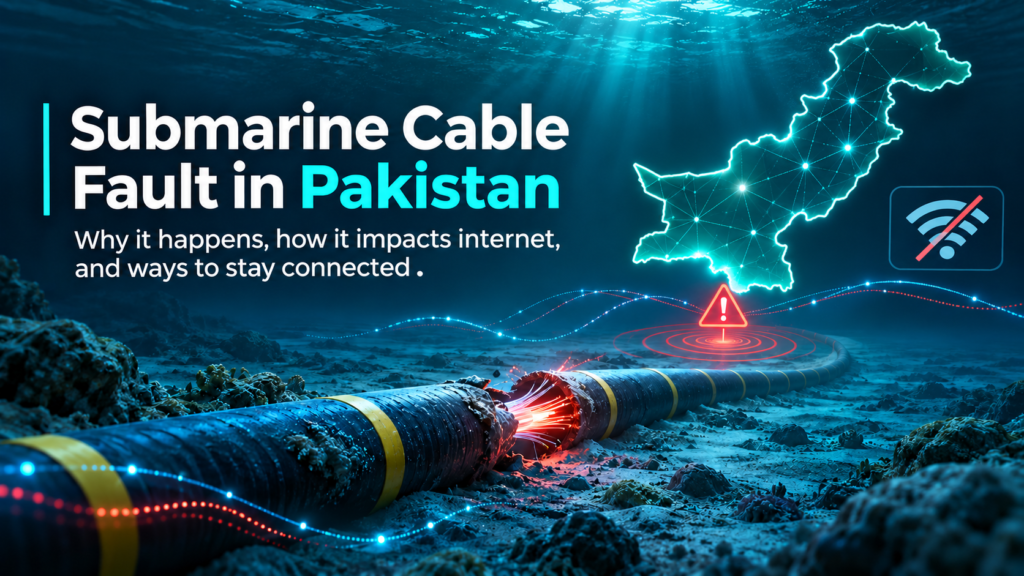
On November 18, 2026, the Pakistan Telecommunication Authority (PTA) reported a fault in the SEA-ME-WE 5 (SMW-5) submarine cable, approximately 11 kilometres off Pakistan’s coastline. The fault could cause intermittent internet disruptions and slower connectivity for some users.
Transworld Associates (TWA) is coordinating with the cable consortium to identify the problem, while internet traffic is being redirected through alternative international routes.
Why Do Submarine Cables Get Damaged?
Submarine cables carry international internet traffic across oceans, making them essential to global communication.
However, they remain vulnerable to several threats:
- Fishing and Ship Anchors: Fishing equipment and ship anchors can accidentally damage underwater cables.
- Natural Disasters: Underwater earthquakes, landslides, and strong currents can disrupt cable infrastructure.
- Technical Failures: Equipment faults, ageing components, and physical deterioration can interrupt connectivity.
- Human Interference: Construction activities and accidental or deliberate interference may also cause damage.
The specific cause of Pakistan’s latest SMW-5 fault has not yet been confirmed in the initial announcement.
How Can Pakistan Prevent Future Internet Disruptions?
While completely eliminating submarine cable faults is difficult, several measures can reduce their impact.
- Strengthen Underwater Cable Protection
Burying cables beneath the seabed, monitoring vulnerable areas, and restricting anchoring near cable routes can help minimise accidental damage.
- Expand International Internet Connections
Pakistan should invest in additional submarine cables and independent land-based fibre-optic routes to reduce reliance on limited international connections.
- Develop Local Data Centres
Hosting more websites, applications, and digital services within Pakistan can reduce reliance on international connectivity for locally accessible content.
- Introduce Reliable Backup Networks
Internet providers and businesses should maintain alternative connections, automatic network failover systems, and sufficient backup bandwidth.
- Explore Satellite Internet
Satellite-based connectivity can provide an additional communication option during certain network disruptions, subject to availability, cost, and regulatory approval.
What Can Businesses and Individuals Do?
Internet disruptions can affect online businesses, freelancers, students, and organisations dependent on digital communication.
A few precautions can make a significant difference:
- Maintain connections from two different internet providers.
- Keep a mobile data connection as a backup.
- Save important business documents for offline access.
- Use cloud services with offline functionality.
- Establish alternative communication channels during outages.
However, backup connections may also be affected if they share the same international infrastructure.
Conclusion: Pakistan Needs a More Resilient Digital Future
The recent submarine cable fault is a reminder that fast internet alone is not enough; reliable connectivity matters just as much.
By strengthening underwater cable protection, expanding alternative international routes, and investing in backup infrastructure, Pakistan can reduce the impact of future internet disruptions.
The goal should not simply be to restore internet connectivity after a failure, but to build a digital network strong enough to keep Pakistan connected when disruptions occur.